
What's Happening?
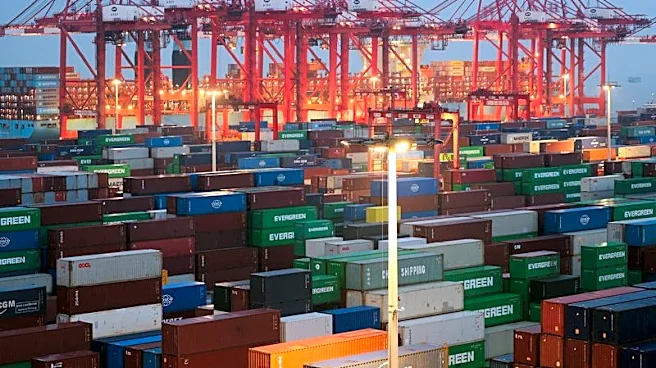
China has been quietly amassing the world's largest stockpile of crude oil, a strategic move that is reshaping its relations with the United States. This development comes as Chinese Premier Xi Jinping
prepares to host President Trump for a state visit on May 14 and 15. The situation is further complicated by China's Commerce Ministry's decision to ban Chinese companies from complying with U.S. sanctions on small refineries that purchase Iranian crude. These 'teapot refineries' have been encouraged to import Iranian oil, which could lead to further U.S. sanctions. The U.S. Energy Information Administration reports that China added an average of 1.1 million barrels per day to its strategic reserves in 2025, with continued growth in 2026. This stockpiling has helped stabilize oil prices amid Middle East tensions, providing a buffer for Asian importers affected by the halt in energy deliveries.
Why It's Important?
The strategic stockpiling of oil by China represents a significant shift in global energy dynamics, particularly in its relationship with the United States. As China builds its reserves, it gains leverage in international energy markets, potentially reducing its vulnerability to supply disruptions and price volatility. This move also complicates U.S. efforts to enforce sanctions on Iran, as China's actions could undermine these measures. The upcoming Trump-Xi summit is expected to focus heavily on these issues, potentially overshadowing other agenda items such as tariffs and technology. The outcome of this meeting could have far-reaching implications for global energy markets and U.S.-China relations, affecting everything from oil prices to geopolitical alliances.
What's Next?
The Trump-Xi summit will likely address the ongoing tensions related to China's oil stockpiling and its non-compliance with U.S. sanctions. Depending on the discussions, the U.S. may consider additional sanctions or diplomatic measures to counter China's strategic moves. The meeting's outcome could influence future U.S. foreign policy and economic strategies, particularly in relation to energy security and trade. Additionally, other countries may adjust their own energy policies in response to the evolving U.S.-China dynamic, potentially leading to shifts in global oil supply and demand.