


What's Happening?
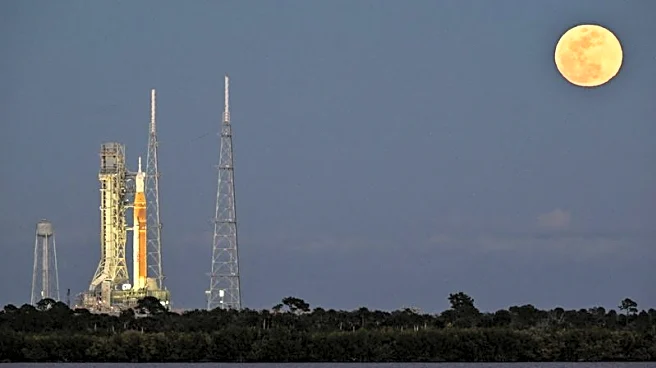
NASA's Artemis II moon rocket is being returned to the hangar for repairs after a helium system malfunction. This issue has delayed the planned launch, which is now targeted for April. The Artemis II mission involves a crew of four astronauts, including
three Americans and one Canadian, who will be the first humans to fly to the moon since the Apollo program ended in 1972. The rocket had previously undergone a repeat fueling test to address hydrogen fuel leaks, but the helium flow disruption requires further investigation and repair.
Why It's Important?
The Artemis II mission is a significant step in NASA's efforts to return humans to the moon, marking the first such mission in over half a century. The delay highlights the challenges of space exploration, where technical issues can impact timelines and mission success. Resolving these issues is crucial for maintaining the schedule and ensuring the safety of the crew. The mission's success could pave the way for future lunar exploration and potentially establish a sustainable human presence on the moon.
What's Next?
NASA is targeting an April launch, contingent on successful repairs to the helium system. Engineers will work to identify and fix the issue, ensuring the rocket is ready for the mission. The crew remains on standby in Houston, prepared for the historic flight. NASA will continue to monitor and address any further technical challenges, aiming to preserve the launch window and achieve mission objectives.