








What's Happening?
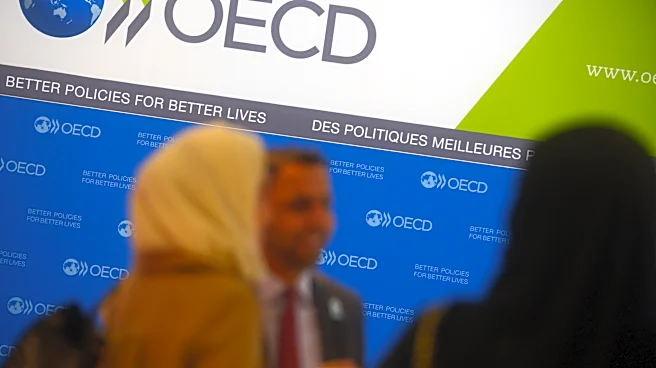
The Organisation for Economic Co-operation and Development (OECD) is actively recruiting a Junior Economist to join its Development Centre, specifically within the Regional Development Dynamics Division's Europe, Middle East, and Africa (EMEA) Unit. This
role focuses on conducting high-quality policy research and quantitative economic analysis related to development in Africa. The selected candidate will contribute to flagship projects such as the 'Africa’s Development Dynamics' report, 'Revenue Statistics in Africa,' and initiatives like the 'Accelerating and Scaling Up Quality Infrastructure Investment in Africa (ASQIIA).' The position requires an advanced university degree in economics, with a preference for macroeconomics, and at least three years of experience in applied economic research in developing countries, particularly with a focus on trade, agricultural, or industrial development in Africa. The OECD, an international organization comprising 38 member countries, aims to promote policies that enhance global economic and social well-being.
Why It's Important?
This recruitment highlights the OECD's continued commitment to understanding and addressing economic development challenges in Africa. By investing in specialized research, the OECD aims to provide evidence-based insights that can inform policy dialogue and support reform efforts across the continent. The work of the Junior Economist will directly contribute to reports and initiatives that offer innovative regional perspectives, helping governments and policymakers in Africa to improve economic performance, create jobs, and foster strong education systems. For U.S. stakeholders, particularly those involved in international development, trade, or foreign policy, the OECD's research provides crucial data and analysis that can influence aid strategies, investment decisions, and diplomatic engagements with African nations. The focus on infrastructure investment and revenue statistics can also guide U.S. businesses looking for opportunities or assessing risks in African markets.
What's Next?
The OECD anticipates filling this vacancy as soon as possible, with a written test scheduled for approximately December 2026 and panel interviews in January 2027. The selected Junior Economist will immediately begin contributing to ongoing projects, including the coordination and quality control of publications like 'Africa’s Development Dynamics.' Their work will involve engaging with stakeholders from various governments and partner organizations, such as the African Union Commission (AUC) and the European Union (EU), to disseminate research findings and support policy implementation. The insights generated from this role are expected to fuel further policy dialogue and potentially lead to new initiatives aimed at accelerating sustainable growth and reducing poverty and inequalities in Africa. The position is a 12-month fixed-term appointment with the possibility of renewal, indicating a long-term commitment to this area of research.
Beyond the Headlines
The OECD's continuous focus on African economic development through roles like the Junior Economist underscores a broader global recognition of Africa's growing strategic importance. Beyond immediate policy implications, this sustained research effort contributes to a deeper understanding of complex socio-economic dynamics, which can help counter simplistic narratives about the continent. The emphasis on data-driven analysis and best-practice sharing fosters a more informed approach to development aid and international cooperation, moving beyond traditional donor-recipient models towards partnerships based on mutual growth. This initiative also highlights the critical role of international organizations in providing neutral, expert analysis that can bridge knowledge gaps and facilitate collaborative solutions to global challenges, ultimately influencing long-term economic stability and prosperity in a region with significant demographic and resource potential.