




What's Happening?
The Danish Technological Institute, with DKK 5.5 million from the Grundfos Foundation, is spearheading an initiative to develop and deploy mobile, off-grid water purification units in war-torn areas of Ukraine. This project, named 'Ukraine Water Resilience,'
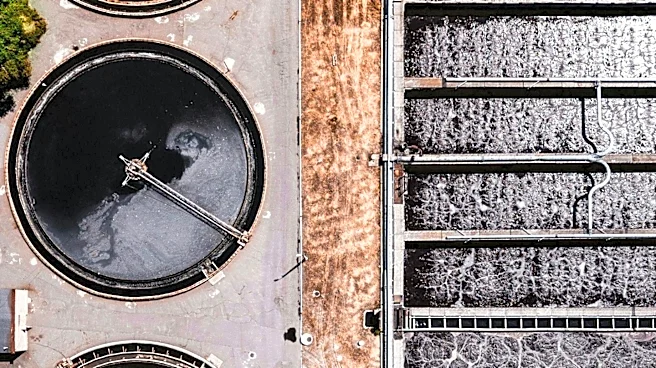
is a collaborative effort with the International Red Cross and other partners. The goal is to provide clean drinking water to Ukrainian civilians whose access has been compromised due to damaged infrastructure from conflict. At least three robust containerized units will be developed, capable of supplying 100,000 liters of drinking water per day, sufficient for up to 50,000 people according to UN standards. The International Federation of Red Cross and Red Crescent Societies (IFRC) is working closely with the Danish Technological Institute to identify areas with the greatest need and facilitate direct contact with local Ukrainian communities. The units are designed for simple operation by local volunteers after brief instructions and will be permanently handed over to Ukrainian partners post-project.
Why It's Important?
This initiative is crucial for addressing the immediate humanitarian crisis in Ukraine, where civilians often lose access to clean drinking water within hours of attacks on waterworks and power grids. Beyond immediate aid, the project serves as a blueprint for accelerating crisis and emergency response innovation, particularly for Denmark and other Nordic civil protection systems. The field experiences gained in Ukraine will help prepare these systems against cyberattacks, sabotage, and supply failures, enhancing their resilience. The 'Jutlandia Method,' inspired by the US Defense Advanced Research Projects Agency (DARPA), is being employed, fostering competition among consortia to develop robust solutions. This approach aims to bridge acute humanitarian aid with long-term preparedness solutions, ensuring that technologies are not stalled in development but are rapidly deployed and validated under real-world, harsh conditions. The project also builds valuable knowledge for Danish authorities and emergency stakeholders, including the Danish Emergency Management Agency (DEMA), for developing mobile waterworks for domestic crises.
What's Next?
The project will continue with three selected consortia of companies and research institutions competing to further develop an existing prototype from Danish Green Energy Consulting. These teams will work in parallel tracks, tailoring their technology to Ukrainian needs. The initial phase involves thorough investigation of varying source water conditions in Ukraine to ensure the units can effectively treat diverse water types while maintaining robustness, low energy consumption, and purity. Once ready, the mobile water purification units will be transported to affected areas in Ukraine and connected to local water sources. Siting will be flexible, determined in dialogue with Ukrainian authorities and the Red Cross, potentially at reception centers for internally displaced persons or in areas with critically damaged infrastructure. After the project period, the containers will be permanently handed over to Ukrainian partners, ensuring sustained access to clean water.
Beyond the Headlines
The 'Ukraine Water Resilience' project highlights a significant shift in emergency innovation, moving from prolonged development phases to rapid field validation under extreme conditions. This 'Jutlandia Method' could set a new standard for how humanitarian and civil protection technologies are developed and deployed globally, reducing technological risks for participating partners and opening new opportunities for technology companies in international relief and dual-use applications. The project also underscores the interconnectedness of humanitarian aid and national security, as lessons learned from a conflict zone directly inform and strengthen domestic emergency preparedness against modern threats like cyberattacks and infrastructure sabotage. Furthermore, the initiative emphasizes the ethical imperative of ensuring access to fundamental human needs like clean water during conflicts, while simultaneously building long-term resilience and capacity within affected communities through training and permanent handover of essential infrastructure.