
What's Happening?
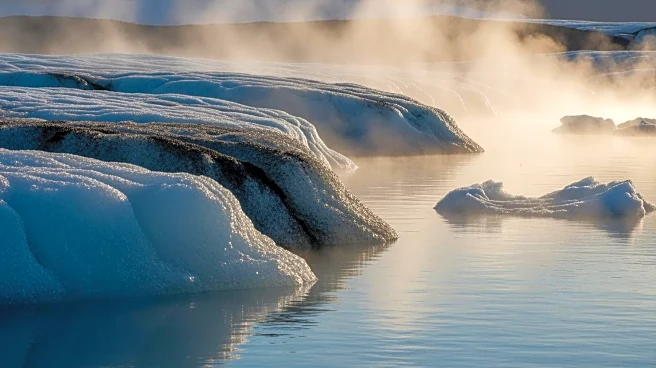
Recent studies suggest that the melting of glaciers due to climate change could potentially reawaken dormant volcanoes, posing significant risks globally. Iceland's Bardarbunga volcano, located beneath
Europe's largest glacier, Vatnajökull, has shown signs of activity, indicating that magma is moving beneath the ice. Scientists are investigating whether the retreating ice is triggering more frequent and explosive volcanic eruptions. This phenomenon is not limited to Iceland; similar conditions exist in Alaska, the west coast of North America, South America, eastern Russia, and Antarctica. The melting ice reduces pressure on the Earth's crust, potentially increasing magma production and leading to more eruptions.
Why It's Important?
The potential reawakening of volcanoes due to melting glaciers could have profound implications for global safety and environmental stability. Approximately 160 million people live within 60 miles of an ice-covered volcano, making them vulnerable to volcanic activity. The interaction between climate change and volcanic activity could create a feedback loop, where eruptions contribute to further warming and ice melting. This could lead to increased volcanic eruptions, affecting air travel, agriculture, and human settlements. Understanding these interactions is crucial for predicting future volcanic activity and mitigating risks.
What's Next?
Scientists are continuing to study the relationship between melting glaciers and volcanic activity to better predict future eruptions. Technical site visits and further research are planned to refine exploration priorities and assess the potential for repeat deposits. The findings could influence global climate policy and disaster preparedness strategies. As global temperatures rise, landscapes will change dramatically, and many glaciated volcanoes may lose their ice cover within the next century.
Beyond the Headlines
The melting of glaciers and potential volcanic eruptions highlight the complex interactions between climate change and geological processes. This situation underscores the need for comprehensive climate action and disaster preparedness. The study of these interactions could lead to new insights into Earth's geological processes and inform future environmental policies.