





What's Happening?
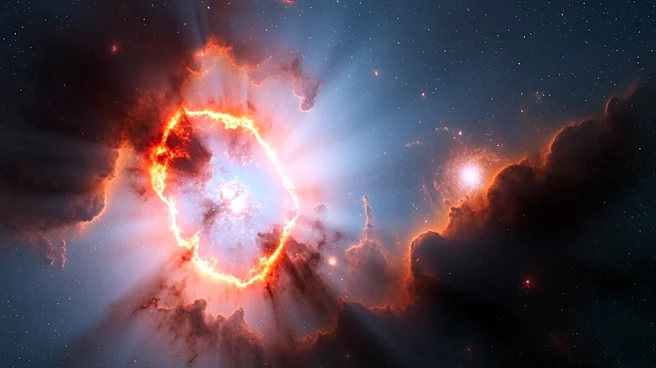
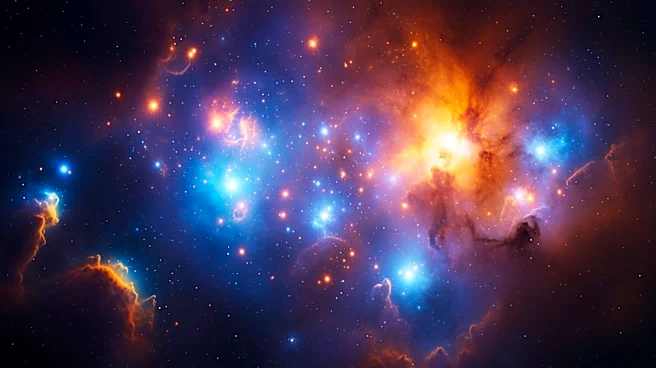
The James Webb Space Telescope (JWST) has unveiled new images of the W51 star-forming region, revealing previously hidden young stars. This breakthrough provides astronomers with an unprecedented view of massive stars that were obscured by cosmic dust.
The JWST's advanced infrared technology allows scientists to peer through these dust clouds, offering insights into the early stages of star formation. Researchers from the University of Florida, including Professor Adam Ginsburg, have utilized these images to study the formation mechanisms of these stars. The images also show dark filaments of gas and ionized gas bubbles, which are crucial for understanding how stars evolve and influence their environments.
Why It's Important?
This discovery is significant as it enhances our understanding of star formation, a fundamental process in the universe. The ability to observe young stars in their formative stages provides valuable data that can refine existing models of star formation. The JWST's findings, when combined with data from other telescopes like the Atacama Large Millimeter/submillimeter Array (ALMA), offer a more comprehensive picture of these processes. This research could answer long-standing questions about the role of high-mass stars in the cosmos, potentially impacting theories related to the evolution of galaxies and the universe.
What's Next?
The research team plans to continue analyzing the JWST images to uncover more details about the W51 region. By comparing these findings with data from other telescopes, scientists aim to gain a deeper understanding of the complex processes involved in star formation. This ongoing research could lead to new discoveries about the life cycle of stars and their impact on the universe. The continued study of these images is expected to reveal more surprises and contribute to the broader field of astrophysics.