





What's Happening?
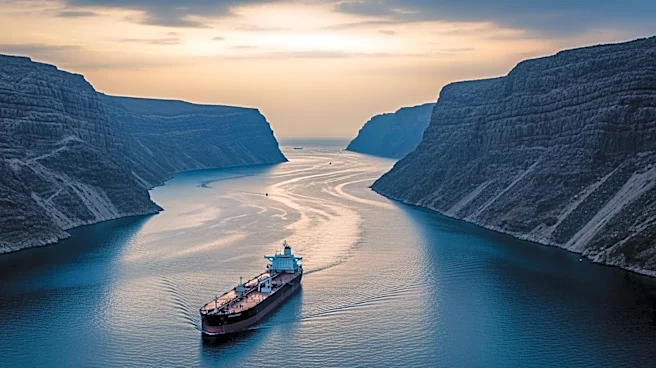
The Strait of Hormuz, a critical energy artery, is experiencing prolonged disruption in tanker traffic despite a temporary ceasefire between the U.S. and Iran. The ceasefire, contingent on the reopening of the strait, has not restored confidence among
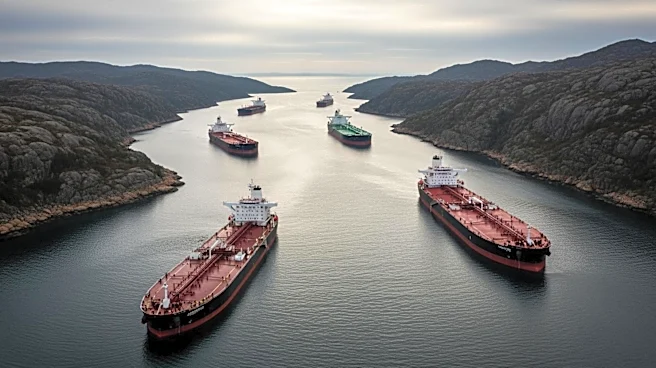
shipping companies, as tensions remain high with escalating attacks by Israel on Lebanon. According to S&P Global Market Intelligence, only four transits were recorded on Wednesday, with over 400 oil tankers and dozens of LNG carriers anchored outside the Gulf. The situation is compounded by Iran's conditional reopening of the strait, subject to coordination with its armed forces.
Why It's Important?
The disruption in the Strait of Hormuz has significant implications for global energy markets, as the strait typically carries around one-fifth of the world's oil and gas supplies. The prolonged disruption threatens to exacerbate the energy supply crunch, potentially leading to higher prices and economic instability. The situation highlights the geopolitical complexities of the region, with the fragile ceasefire failing to provide a stable environment for shipping. The uncertainty surrounding the strait's reopening underscores the challenges faced by global energy stakeholders in navigating political tensions and ensuring the security of supply routes.
What's Next?
The first 48 hours of the ceasefire will be crucial in determining shipowners' willingness to enter the strait. Maritime experts suggest that the situation may not normalize for weeks, if not months, as transit conditions and legal frameworks remain undefined. The ongoing geopolitical tensions, particularly with Israel's actions in Lebanon, could further complicate efforts to stabilize the region. Stakeholders will need to closely monitor developments and adapt their strategies to mitigate risks associated with the disruption in the Strait of Hormuz.