
What's Happening?
A new national poll, the Civil Rights Monitor, commissioned by The Leadership Conference on Civil and Human Rights and conducted by Brilliant Corners Research, indicates significant voter anxiety regarding their rights and the state of American democracy.
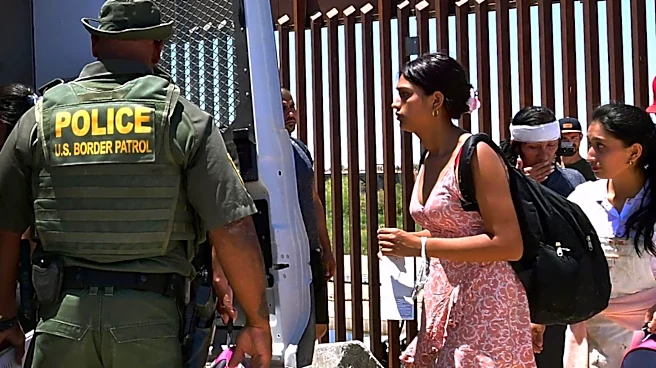
The survey, which polled 1,000 likely voters between August 23 and September 6, 2026, found that 82% of voters are concerned about their rights and freedoms being eroded, marking a record high for the poll series. Additionally, 76% believe democracy is under major threat. Key findings highlight that 77% of voters are worried about political leaders pressuring election officials to alter outcomes, and 65% fear the federal government might attempt to halt elections by declaring a state of emergency. A majority of voters, 58%, disapprove of the performance of Immigration and Customs Enforcement (ICE), with 71% opposing cuts to social programs like Medicare and SNAP to fund the agency's budget increase. The poll also revealed that 53% of voters believe race relations in America are deteriorating, and 92% agree that the nation's diversity strengthens it.
Why It's Important?
These findings are crucial as they reflect a deep-seated concern among the U.S. electorate about fundamental democratic processes and individual liberties, directly impacting the political landscape leading into the 2026 midterm elections. The widespread fear of election interference and the erosion of rights could significantly influence voter turnout and candidate selection, potentially leading to shifts in political power. The strong opposition to funding ICE by cutting social programs indicates a public preference for social welfare over increased immigration enforcement, which could pressure lawmakers to reconsider budget allocations. Furthermore, the perception of declining race relations and rising concern over white supremacy underscore persistent societal divisions, posing challenges for national unity and policy-making aimed at addressing systemic inequalities. The high motivation among Black voters, who are most alarmed by these trends, suggests their demographic will be a critical voting bloc, potentially shaping election outcomes and driving calls for civil rights protections.
What's Next?
The results of this poll are likely to intensify discussions around election integrity, civil rights, and government accountability as the 2026 midterm elections approach. Political leaders and campaigns will likely address these voter anxieties, with some potentially emphasizing the protection of democratic institutions and individual freedoms, while others might focus on law and order or border security. Civil rights organizations, such as The Leadership Conference, are expected to leverage these findings to advocate for stronger protections against voter intimidation and for policies that uphold democratic norms. The Attorney General may face increased scrutiny regarding the federal government's role in elections and immigration enforcement. The ongoing concerns about race relations and the Supreme Court's approval ratings could also fuel further activism and legal challenges aimed at addressing perceived injustices and safeguarding civil liberties.
Beyond the Headlines
The poll's insights extend beyond immediate political implications, revealing a broader societal unease about the foundational principles of American democracy. The significant concern about political leaders pressuring election officials highlights a crisis of trust in governmental processes and institutions. This erosion of trust could have long-term consequences for civic engagement and the stability of democratic governance. The strong rejection of cutting social programs to fund ICE also points to a potential re-evaluation of national priorities, suggesting a public desire for a more compassionate and inclusive approach to social welfare and immigration. Moreover, the increasing perception that race relations are worsening, coupled with the rising worry about white supremacy, indicates a deep-seated cultural struggle over identity and equality. These trends suggest a need for sustained dialogue and policy interventions to bridge divides and reinforce the values of a multiracial democracy, potentially leading to a 'Third Reconstruction' as supported by a majority of voters.