






What's Happening?
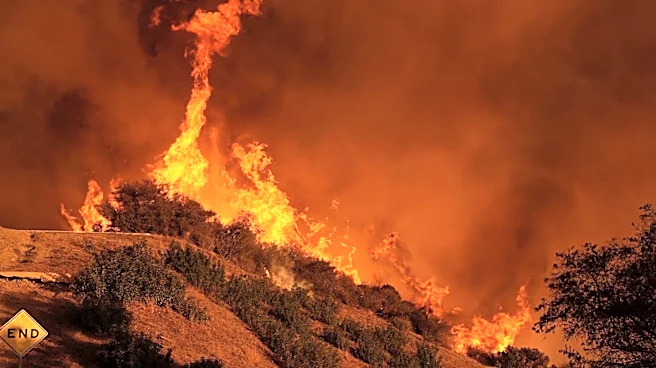
The National Park Service estimates that 60 to 80 percent of Santa Rosa Island's Torrey pines are expected to die following the largest wildfire in Channel Islands National Park history. The fire, which started on May 15, burned almost 40 percent of the island,
covering 18,379 acres, and was not fully contained until June 4. The Torrey pine, considered the rarest native pine in the United States and critically endangered by the International Union for Conservation of Nature, grows naturally in only two locations: Santa Rosa Island and Torrey Pines State Natural Reserve in San Diego. The Santa Rosa Island subspecies is distinct, being shorter, broader, and bushier with thicker bark and blue-gray needles. Initial assessments after the fire suggested the pines were largely intact, but further evaluation by a Burned Area Emergency Response team revealed extensive damage, including scorched crowns and root systems, and a lack of sap production in most fire-damaged trees. This indicates that the mature Torrey pine is not well adapted to survive moderate to high-severity fires.
Why It's Important?
The potential loss of a significant portion of Santa Rosa Island's Torrey pine population represents a critical blow to a species already facing severe vulnerability. This particular subspecies is unique to the island, making its preservation vital for biodiversity. The fire's impact highlights the fragility of rare ecosystems and the long-term consequences of wildfires, especially in areas with limited genetic variability and specific environmental requirements. The loss of these trees could lead to further ecological instability on the island, affecting other indigenous plant and animal species that rely on the Torrey pine ecosystem. The efforts to stabilize the population underscore the challenges faced by conservationists in protecting endangered species from increasing environmental threats, including the aftermath of natural disasters. The incident also brings attention to the broader issue of wildfire management and its impact on sensitive natural habitats across the U.S.
What's Next?
In response to the anticipated mortality, the National Park Service has initiated urgent measures to stabilize the Torrey pine population before the upcoming rainy season. Crews and volunteers have begun installing approximately 250 wattles, which are natural fiber tubes designed to slow rainwater flow and prevent soil erosion on charred hillsides. This is crucial as heavy fall rains could lead to devastating erosion, washing away the fragile topsoil essential for the Torrey pines. Additionally, park staff and cooperating groups have collected over 14,000 Torrey pine seeds from the island. These seeds will be sent to an island nursery to be grown into seedlings, with plans to plant 300 to 500 seedlings annually across a 15-acre restoration area. Other collected seeds will be placed in a seed bank for future conservation efforts. The plan also includes cleaning culverts to protect road systems, stabilizing vulnerable archaeological sites, repairing damaged trails, and monitoring for invasive plant species.
Beyond the Headlines
The Santa Rosa Island wildfire and its devastating impact on the Torrey pine population underscore the complex interplay between natural events, human intervention, and long-term ecological health. The Torrey pine's extreme rarity and limited genetic variability make it particularly susceptible to environmental changes, raising ethical questions about humanity's role in protecting such unique species. The historical context of the island's use for sheep grazing in the 1880s, which reduced the grove to only about 100 healthy trees, serves as a stark reminder of past human impacts. While the grove recovered after the sheep's removal, the current fire presents a new, significant challenge. The incident highlights the need for proactive conservation strategies, including seed banking and off-site cultivation, to safeguard species that are highly vulnerable to localized threats. It also emphasizes the importance of understanding the fire ecology of rare species, as the Torrey pine's response to fire was largely unknown due to its rarity and limited fire history on the island.