





What's Happening?
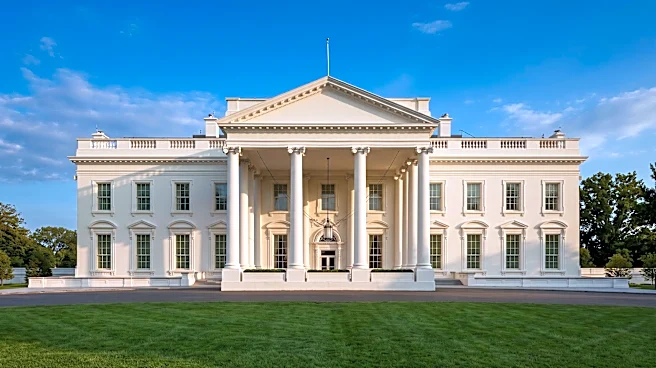
A White House website that refers to undocumented immigrants as 'aliens' and suggests they 'walk among us' has sparked significant criticism from civil rights advocates. Critics argue that the language used on the platform dehumanizes non-citizens and misrepresents
regional immigration data. The website details millions of immigration encounters nationwide and includes a tracker displaying local arrest figures, such as 542 in Seattle, 487 in Tukwila, and 716 in Yakima. Although the online interface attributes these statistics to U.S. Immigration and Customs Enforcement (ICE), federal officials, when contacted by FOX 13 Seattle, redirected inquiries back to the White House, clarifying that the numbers encompass more than just ICE operations. Human rights advocates warn that the website's framing ignores the real-world demographics of immigration enforcement and employs rhetoric designed to isolate non-citizens.
Why It's Important?
This development is important because it highlights a contentious aspect of immigration discourse and policy in the U.S. The use of terms like 'alien' by a government website can significantly impact public perception and contribute to xenophobia, potentially leading to increased discrimination and hostility towards immigrant communities. Civil rights groups, such as the ACLU of Washington, emphasize that such rhetoric is dehumanizing and creates a false sense of 'otherness,' undermining the integral role immigrants play in American society. Furthermore, the website's presentation of arrest data, which links non-citizens to criminality, is challenged by independent studies. Data from the University of Washington Center for Human Rights suggests that a significant majority (60% to 70%) of individuals arrested for immigration violations have no prior criminal history, indicating a potential misrepresentation of facts that could influence public opinion and policy decisions.
What's Next?
The backlash from civil rights advocates is likely to continue, potentially leading to increased calls for the White House to revise the language and data presentation on its immigration website. Advocacy groups may intensify their efforts to educate the public and policymakers about the implications of dehumanizing rhetoric and the actual demographics of immigration enforcement. There could be further investigations or reports from independent organizations to counter the narrative presented on the government website. Additionally, the controversy might influence future policy debates on immigration, potentially prompting lawmakers to address the language used in official communications and the accuracy of data shared with the public. The encouragement for the public to report 'suspicious aliens' could also lead to increased scrutiny of community vigilance programs and their potential for racial profiling and vigilantism.
Beyond the Headlines
Beyond the immediate controversy, this situation touches upon deeper ethical and cultural dimensions of how the U.S. government communicates about immigration. The use of 'alien' terminology, often associated with science fiction, can subtly embed a narrative of foreignness and threat, impacting the social integration and psychological well-being of immigrant populations. This framing can also normalize discriminatory attitudes and practices, making it harder to foster an inclusive society. The discrepancy between the government's presented data and independent research raises questions about data transparency and the potential for selective information dissemination to support specific political agendas. This incident underscores the ongoing struggle between national security concerns and human rights, and how language itself can become a battleground in shaping public perception and policy regarding immigration.