





What's Happening?
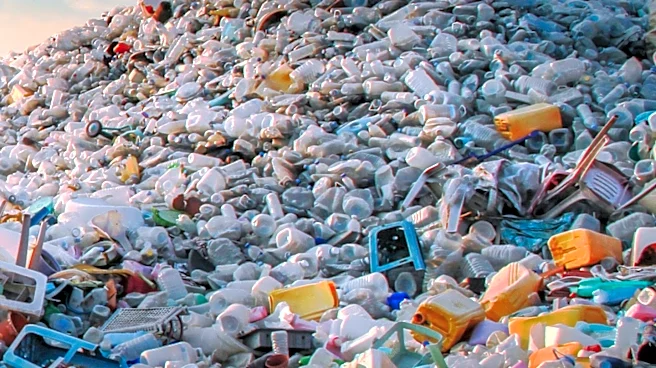
A legally binding Global Plastics Treaty is being discussed as a crucial measure to address the widespread issue of plastic pollution and its significant impact on climate change. According to The Business Standard, such a treaty would establish common
international obligations, set measurable targets, and create accountability mechanisms that cover the entire life cycle of plastics. The effectiveness of this treaty will largely depend on the ambition of its provisions and the willingness of governments to implement them. Key elements emphasized include science-based measures to reduce excessive production and consumption of plastics, particularly avoidable and difficult-to-manage products. This reduction in demand for virgin plastics aims to limit emissions from fossil fuel extraction, feedstock processing, and manufacturing. The treaty also seeks to prevent pollution-intensive production from shifting between countries and highlights the necessity of international assistance, including predictable financial resources, technology transfer, and capacity-building, for developing countries to meet their obligations.
Why It's Important?
The proposed Global Plastics Treaty is important because plastic pollution is identified as a significant contributor to greenhouse gas emissions, accounting for approximately 1.8 billion tonnes in 2019, or 3.4% of global emissions, with 90% originating from production. Addressing this issue through a legally binding treaty would complement existing climate agreements like the Paris Agreement by tackling a major source of emissions that has received insufficient attention. For climate-vulnerable nations, improved waste management facilitated by the treaty could lead to cleaner rivers, better drainage systems, healthier coastal ecosystems, and more resilient communities. The treaty aims to shift away from voluntary corporate pledges and national initiatives, which have proven insufficient, towards a unified global approach. This would ensure that the environmental and financial costs of plastic pollution are not disproportionately borne by developing countries, but rather shared with the industries and nations that have benefited most from fossil fuel-based plastic production.
What's Next?
The ongoing discussions surrounding the Global Plastics Treaty will focus on finalizing its ambitious provisions and securing the commitment of governments for implementation. Future steps will involve establishing clear, science-based targets for reducing plastic production and consumption, particularly for problematic products. There will be an emphasis on improving the measurement and reporting of emissions throughout the plastics life cycle to identify hotspots and develop effective policies. The treaty is expected to push for the elimination of problematic products and chemicals of concern, supported by sound scientific assessments. Furthermore, there will be a focus on prioritizing reuse and circular design principles, such as refillable packaging and durable products, to reduce the demand for virgin materials. Ensuring predictable financial resources, technology transfer, and capacity-building for developing countries will be critical, potentially through mechanisms like extended producer responsibility. Transparent reporting and regular reviews will be essential to track progress and ensure accountability.
Beyond the Headlines
Beyond the immediate environmental and climate benefits, the Global Plastics Treaty has deeper implications for global economic structures and social equity. By targeting the reduction of virgin plastic production, the treaty challenges the fossil fuel industry's expanding use of oil and gas as feedstocks for plastics, potentially accelerating the transition to a more sustainable economy. It also highlights the ethical dimension of environmental justice, as low-income communities and informal waste workers often bear the brunt of plastic pollution's consequences. The treaty's emphasis on international assistance and equitable burden-sharing could redefine global environmental governance, moving towards a model where developed nations and industries are held more accountable for their environmental footprint. This could also spur innovation in sustainable materials and waste management technologies, creating new economic opportunities and fostering a circular economy on a global scale. The success of this treaty could set a precedent for addressing other global environmental challenges through legally binding international cooperation.