





What's Happening?
Seattle author Eric Liu, a former speechwriter for President Bill Clinton and a presidential appointee under President Barack Obama, is championing continuous civic engagement through his new book, 'Live Like a Citizen: 8 Ways to Change Your Mindset and Our
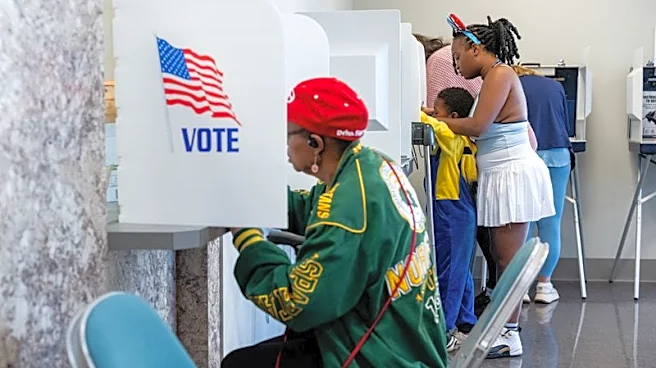
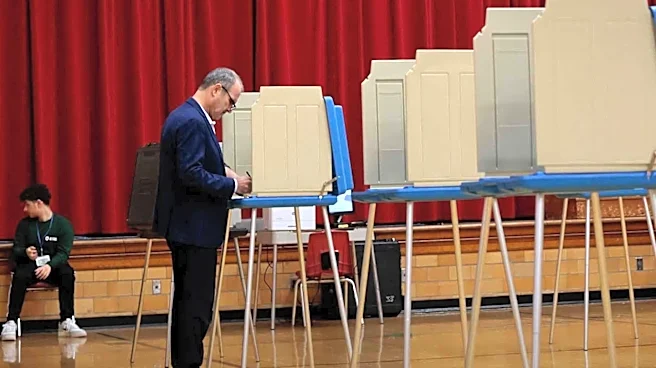
Country.' Liu, who also founded the nonprofit Citizen University, emphasizes that democracy extends beyond elections to include everyday practices of participation, organizing, and free speech. His book, released just before the midterm elections, outlines eight 'elemental ways of being' that he believes Americans have forgotten, such as how to see, listen, feel, join, fight, change, imagine, and commit. Liu argues that the current political climate is dehumanizing and that society is grappling with unacknowledged pain, loss, and grief from various events, including the COVID-19 pandemic, prolonged wars, and economic shifts. He believes that addressing this collective grief and practicing these civic habits are essential for creating a stable society where elections do not feel existential.
Why It's Important?
Liu's work is significant because it shifts the focus of civic engagement from episodic electoral events to a continuous, integrated aspect of daily life. In a period of heightened political polarization and distrust, his call for fundamental civic habits like listening and empathy is crucial for fostering constructive dialogue and community cohesion. By highlighting the 'sedimentary layers of unnamed, unacknowledged, unaddressed, unrequited pain,' Liu addresses the underlying emotional and psychological factors that contribute to societal fragmentation. His emphasis on local engagement and the power of individual actions to build trust and work across differences offers a pathway to strengthen democratic resilience from the ground up. This perspective is vital for moving beyond reactive political cycles and building a more durable and inclusive civic culture in the United States.
Beyond the Headlines
Liu's book delves into the deeper cultural and psychological dimensions of civic life, suggesting that the health of a democracy is intrinsically linked to the emotional and relational capacities of its citizens. The concept of 'grief unacknowledged' curdling into grievance offers a profound insight into the roots of societal division and political dysfunction. By advocating for practices that enable individuals to 'make space for each other in facing that pain,' Liu proposes a therapeutic approach to civic renewal. This perspective suggests that true democratic strength comes not just from institutional structures but from the collective emotional intelligence and relational skills of its people. His work encourages a re-evaluation of what it means to be a 'citizen' in a complex, diverse society, moving beyond mere voting to encompass a holistic commitment to community well-being and mutual understanding.