





What's Happening?
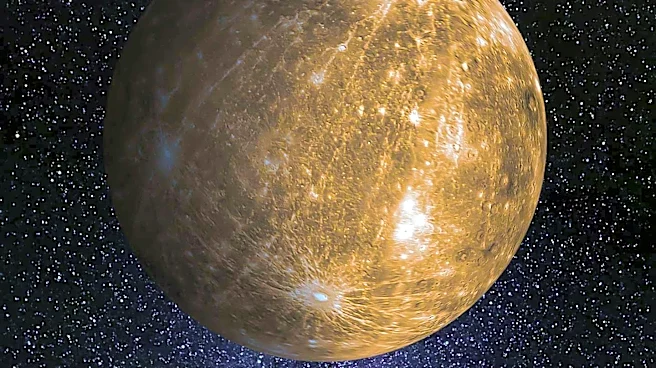
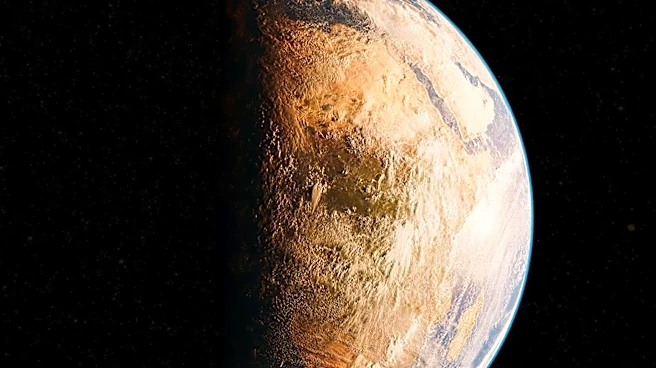
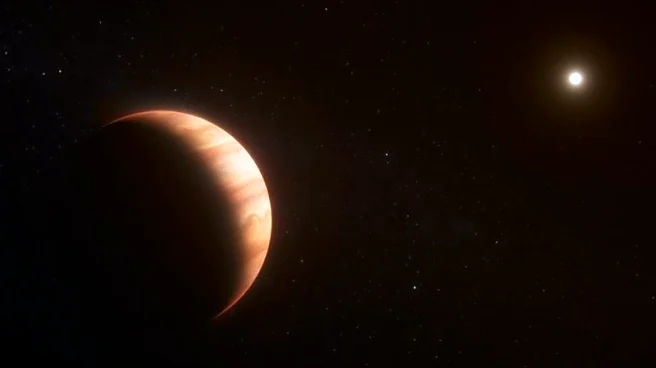
Researchers from the University of California, Irvine have identified an exoplanet named GJ 3378b, located 25 light years away, which bears similarities to Earth. Initially thought to be a 'super-Earth' with a mass five times that of Earth, new studies
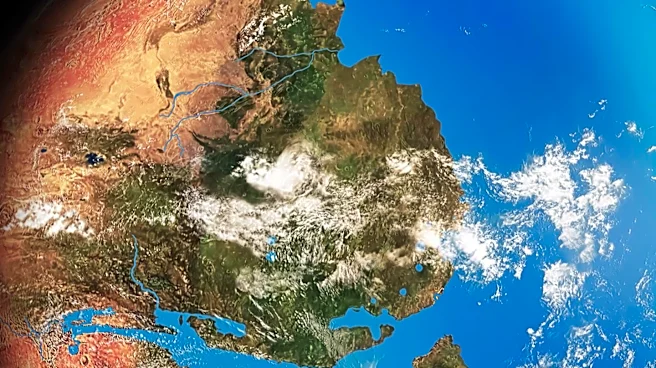
suggest it is only twice as massive, making it a more viable candidate for supporting life. The planet orbits within the habitable zone of a red dwarf star, where conditions could allow for liquid water. However, questions remain about its atmosphere and its ability to protect against radiation from its star.
Why It's Important?
The discovery of GJ 3378b is significant as it represents one of the closest potential candidates for extraterrestrial life. Its proximity to Earth and manageable mass make it an intriguing subject for further study. Understanding its atmosphere and habitability could provide insights into the conditions necessary for life beyond our solar system. This research contributes to the broader field of exoplanet studies, which seeks to identify planets that could support life and expand our understanding of the universe.
What's Next?
Further research is needed to determine the atmospheric conditions of GJ 3378b and its potential to support life. Scientists will focus on whether the planet has a robust atmosphere capable of shielding it from solar radiation. Additionally, the debate continues over the habitability of planets orbiting red dwarf stars, which are known for their volatile solar flares. Future studies will aim to resolve these uncertainties and assess the planet's potential for hosting life.
Beyond the Headlines
The discovery of GJ 3378b raises questions about the habitability of planets in red dwarf systems. These stars are prone to powerful solar flares, which could strip planets of their atmospheres and sterilize any life. The planet's proximity to its star also suggests it may be tidally locked, affecting its climate and potential for life. These factors highlight the complexities of finding habitable planets and the challenges faced by astronomers in understanding extraterrestrial environments.