


What's Happening?
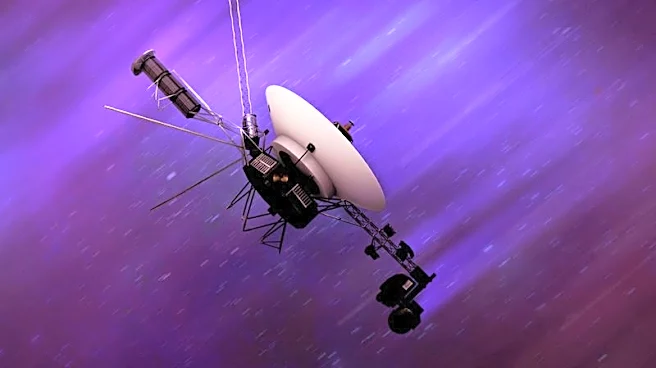
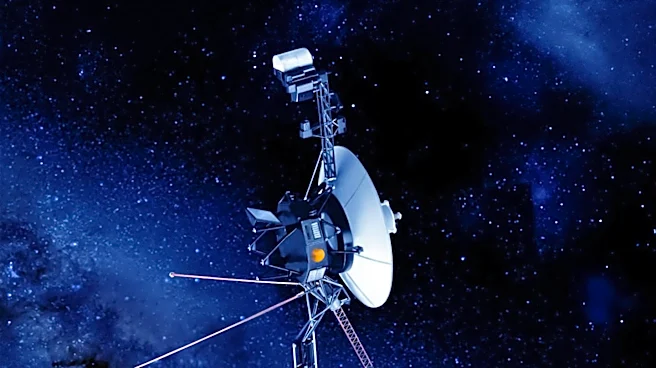
Nicky Fox, Associate Administrator for the Science Mission Directorate at NASA, is slated to participate in a moderated discussion regarding Voyager 1's significant achievement of reaching a distance from Earth where a signal takes one full day to reach the spacecraft
and another day for its response to be received. The event, hosted by the Jet Propulsion Laboratory (JPL), will take place on November 19, 2026, in Pasadena, California, and will also be livestreamed. Other participants include Jonathan Lunine, chief scientist at NASA JPL, Suzanne Dodd, Voyager project manager, Linda Spilker, Voyager project scientist, Kareem Badaruddin, Voyager mission manager, and Jamie Rankin, Voyager deputy project scientist. Voyager 1, launched in September 1977, entered interstellar space on August 25, 2012, after transmitting images of Jupiter and Saturn. NASA will also provide updates on Voyager 2, which is also in interstellar space.
Why It's Important?
This event highlights the enduring legacy and ongoing scientific contributions of the Voyager missions, which have provided unprecedented insights into the outer solar system and interstellar space. The participation of a high-ranking NASA official like Nicky Fox underscores the agency's continued commitment to deep space exploration and scientific discovery. The discussion will likely delve into the challenges and triumphs of operating spacecraft for nearly five decades, offering valuable lessons for future long-duration missions. For the U.S. scientific community, this milestone reinforces leadership in space exploration and inspires future generations of scientists and engineers. The public livestream ensures broad accessibility, fostering greater engagement and understanding of complex scientific endeavors.
What's Next?
The moderated discussion on November 19, 2026, will provide updated information on Voyager 1's status and its scientific findings. NASA is also expected to offer an update on Voyager 2, its twin spacecraft. The event will be livestreamed on platforms such as X and YouTube, allowing a global audience to participate. Separately, The Planetary Society is organizing another event focused on Voyager 1 in the evening. These discussions will likely explore the implications of Voyager 1's current position for understanding the heliosphere and the interstellar medium, potentially influencing future mission planning and scientific research priorities.
Beyond the Headlines
The Voyager missions represent a profound human endeavor to explore the unknown, pushing the boundaries of technology and scientific understanding. The 'one-light-day' milestone for Voyager 1 is not merely a technical achievement but a symbolic representation of humanity's reach into the cosmos. It raises fundamental questions about our place in the universe and the potential for life beyond Earth. The longevity of these spacecraft, operating far beyond their expected lifespans, also highlights the remarkable engineering and dedication of the teams involved. This ongoing journey serves as a powerful reminder of the value of long-term scientific investments and the pursuit of knowledge for its own sake, inspiring a sense of wonder and curiosity about the universe.