


What's Happening?
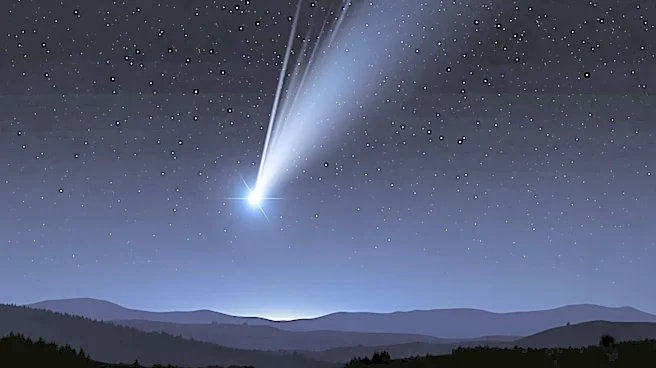
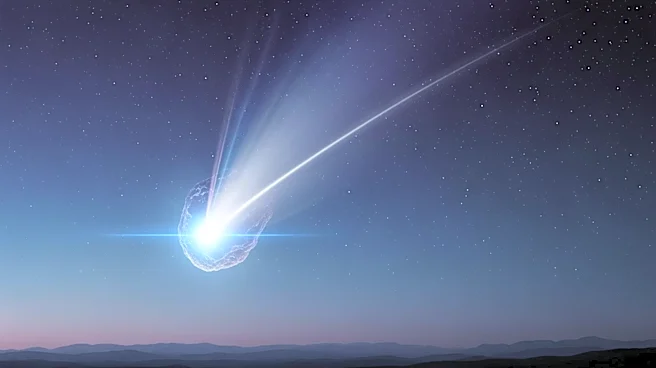
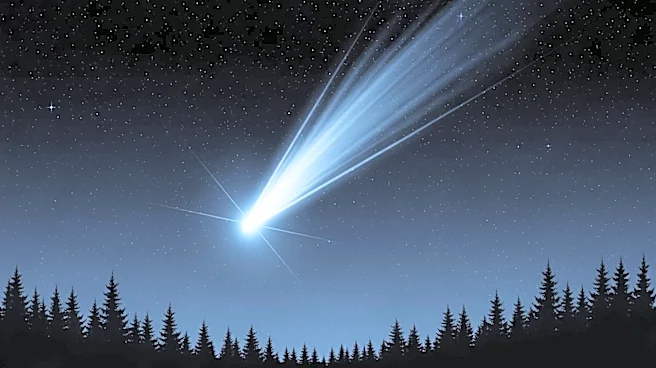
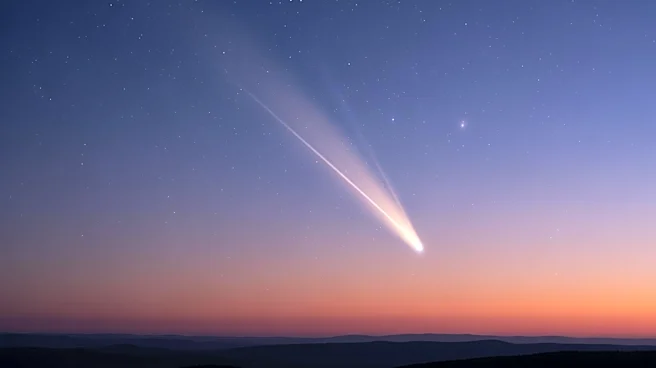
NASA has announced that Comet R3 PanSTARRS, which has been traveling through the solar system since September, is now visible in the early morning sky. The comet will be closest to the sun on April 19, 2026, and will pass between Earth and the sun on April 26, 2026, at a distance
of 45.5 million miles from our planet. Stargazers are encouraged to use binoculars or a telescope to view the comet, which can be seen in the eastern sky approximately two hours before sunrise. This celestial event provides a rare opportunity for enthusiasts to observe a newly discovered comet as it makes its journey through the solar system.
Why It's Important?
The visibility of Comet R3 PanSTARRS presents a significant opportunity for both amateur and professional astronomers to study a comet that is relatively close to Earth. Such events are rare and provide valuable data about the composition and behavior of comets, which are remnants from the early solar system. Observing comets can enhance our understanding of the solar system's formation and evolution. Additionally, this event can inspire public interest in astronomy and science, encouraging educational activities and community engagement in stargazing events.
What's Next?
As Comet R3 PanSTARRS approaches its closest point to the sun, astronomers will continue to monitor its trajectory and behavior. This period will be crucial for collecting data on the comet's composition and any changes it undergoes as it interacts with solar radiation. Public interest is expected to grow as the comet becomes more visible, potentially leading to organized viewing events and increased media coverage. Educational institutions may also use this opportunity to engage students in astronomy-related activities.