






What's Happening?
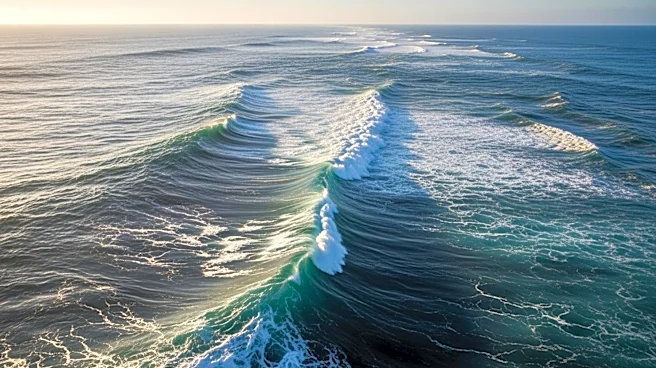
The SWOT satellite, a joint project by NASA and the French space agency CNES, has captured the first high-resolution images of a massive tsunami in the Pacific Ocean. This event followed a magnitude 8.8 earthquake in the Kuril-Kamchatka subduction zone
on July 29, 2025. The satellite's images revealed a complex pattern of energy dispersal, challenging the traditional understanding that large tsunamis behave as non-dispersive shallow-water waves. The data suggests that the physics used in current tsunami forecasting models may need revision, as the satellite's observations showed a more intricate wave pattern than previously assumed.
Why It's Important?
This development is significant as it could lead to improved tsunami forecasting models, which are crucial for early warning systems and disaster preparedness. The ability to capture detailed images of tsunami behavior in the open ocean allows scientists to refine their understanding of wave dynamics, potentially leading to more accurate predictions of tsunami impacts on coastal areas. This could enhance the safety and preparedness of communities at risk of tsunami events, ultimately saving lives and reducing economic losses.
What's Next?
The findings from the SWOT satellite data may prompt a reevaluation of existing tsunami models, incorporating the newly observed dispersive effects. Researchers and hazard planners might need to develop new forecasting systems that integrate this high-resolution data with other sources, such as DART buoys and seismic records. This integration could lead to more comprehensive and accurate real-time tsunami warnings, improving response strategies and mitigation efforts.
Beyond the Headlines
The use of satellite technology in tsunami monitoring represents a significant advancement in the field of geophysics. It highlights the potential for satellites to provide critical data that can transform our understanding of natural disasters. This could lead to broader applications of satellite technology in monitoring other environmental phenomena, contributing to global efforts in disaster risk reduction and climate change adaptation.