






What's Happening?
North Carolina Governor Josh Stein has vetoed House Bill 958, a legislative measure that sought to implement significant changes to the state's election laws. The bill, which passed along party lines, proposed reducing early voting periods in certain
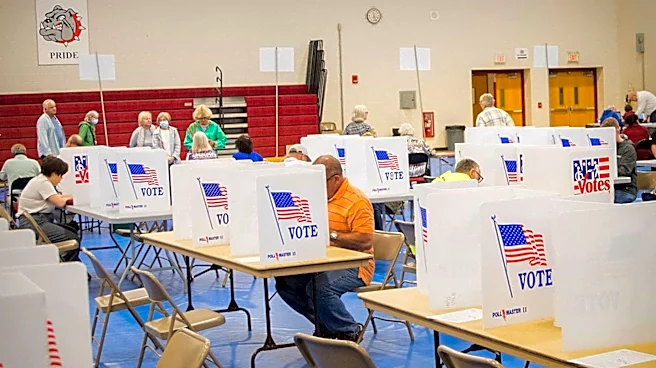
elections, decreasing transparency in campaign finance, and making it easier to challenge voter eligibility and disqualify ballots. Governor Stein, during an event themed 'protect our vote,' argued that the bill was an attempt by Republican lawmakers to gain political advantage by making it harder for citizens to vote and hold elected officials accountable. Republicans, however, contend that the changes are necessary to enhance election integrity, save administrative costs, and boost public confidence in the electoral system, despite a lack of evidence of widespread voter fraud in North Carolina. The bill's provisions included slashing early voting from 17 to 10 days in low-turnout elections like primaries and runoffs, and expanding the ability to purge voter rolls by cross-referencing with databases such as death records. Democrats have expressed concerns that these measures could disenfranchise legitimate voters, citing flaws in government databases and the removal of due process protections for those targeted for removal from voting lists.
Why It's Important?
This veto highlights a significant ongoing national debate regarding voting rights and election security in the U.S. The proposed changes in North Carolina, particularly those related to early voting and voter purges, reflect a broader trend of legislative efforts across various states that critics argue disproportionately affect certain demographics and make voting more difficult. The reduction in early voting days could impact voter turnout, especially among Democratic-leaning constituencies who historically utilize early voting options more frequently. Furthermore, the increased ease of challenging voter eligibility and ballots raises concerns about potential partisan abuse, as seen in past elections where large numbers of ballots were challenged based on minor discrepancies. The dispute also underscores the tension between state legislative control over election processes and gubernatorial oversight, with each side framing their actions as essential for democratic integrity. The outcome of such legislative battles can significantly influence the accessibility and fairness of elections, shaping the political landscape and public trust in democratic institutions.
What's Next?
Following Governor Stein's veto, Republican leaders in the North Carolina legislature may attempt to override it. While lawmakers are currently focused on campaigning for upcoming elections, a session is anticipated in late November or December, after the elections but before new legislators are sworn in. During this session, Republicans could try to gather the necessary votes to override the veto, which would require a three-fifths majority in both chambers. If the veto is overridden, the provisions of House Bill 958 would become law, leading to the implementation of reduced early voting periods and enhanced voter purge mechanisms. This could trigger legal challenges from voting rights advocates and Democratic groups, potentially resulting in court battles over the constitutionality and impact of the new election rules. Conversely, if the veto stands, the current election laws in North Carolina will remain in effect, maintaining the existing framework for early voting and voter registration. The debate surrounding this bill is likely to remain a prominent issue in future political campaigns and legislative sessions.
Beyond the Headlines
The conflict over House Bill 958 extends beyond immediate election mechanics, touching upon fundamental questions of democratic participation and trust. The Republican argument for 'election integrity' often resonates with concerns about voter fraud, even in the absence of widespread evidence, contributing to a narrative that can erode public confidence in election outcomes. Conversely, Democratic arguments about 'voter suppression' highlight the potential for seemingly administrative changes to have significant discriminatory impacts, particularly on minority and low-income voters. The bill's provisions, such as the reliance on potentially flawed databases for voter purges and the elimination of due process for targeted voters, raise ethical questions about the state's responsibility to ensure accurate voter rolls without disenfranchising eligible citizens. This legislative struggle is indicative of a deeper ideological divide in American politics regarding the balance between election security and voter access, and it reflects ongoing efforts to shape the electorate through policy rather than persuasion. The long-term implications could include shifts in voter demographics, increased polarization, and continued legal challenges over the fairness of electoral processes.