







What's Happening?
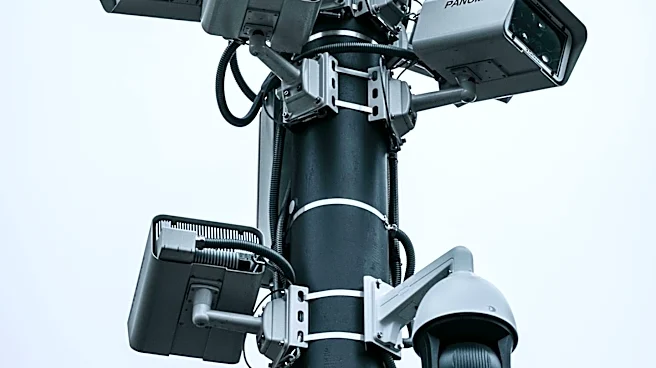
The Kenosha Police Department is ending its contract with Flock Safety a year early and transitioning to Axon for its law enforcement technology needs. Kenosha Police Chief Patrick Patton cited significant concerns regarding Flock Safety's data sharing
practices, data security, and undisclosed capabilities of their cameras, particularly those related to tracking traffic speed and movement. Chief Patton stated that increased questioning and reported 'horror stories' eroded the department's trust in Flock's software. The city has entered into a 10-year contract with Axon, which includes the deployment of 31 Outpost cameras (Axon's equivalent of fixed pole license plate readers), 227 Tasers, 200 body cameras, 100 mobile plate readers, and three drones, alongside cloud-based evidence software. This move comes despite the Kenosha police not finding any instances of officers abusing the Flock system.
Why It's Important?
This decision by the Kenosha Police Department highlights growing concerns among law enforcement agencies regarding data privacy, security, and transparency in their partnerships with technology vendors. The shift from Flock Safety to Axon underscores a critical re-evaluation of the terms and capabilities of surveillance technology. For citizens, this change could mean a different approach to how their data is collected, stored, and accessed by local police, potentially impacting civil liberties and privacy rights. For the technology industry, it signals a demand for greater transparency and accountability from companies providing law enforcement solutions. Axon stands to gain a significant contract and market share, while Flock Safety faces a setback in its reputation and client base, particularly as Chief Patton believes other Wisconsin police departments may follow Kenosha's lead in re-evaluating their contracts.
What's Next?
Following the termination of the Flock Safety contract, the Kenosha Police Department will proceed with the full implementation of its 10-year, $14.6 million contract with Axon. This transition will involve deploying Axon's Outpost cameras, Tasers, body cameras, mobile plate readers, drones, and cloud-based evidence software. Chief Patton indicated that a key advantage of the Axon system is greater control over data access, with plans to limit data sharing to agencies within Wisconsin and potentially neighboring Lake County, Illinois, rather than allowing nationwide searches. This localized data sharing approach is expected to be a model for other police departments in Wisconsin, suggesting a potential trend of similar transitions across the state as agencies prioritize data control and transparency.
Beyond the Headlines
The Kenosha Police Department's decision to switch from Flock Safety to Axon reflects a broader societal and ethical debate surrounding surveillance technology and its impact on privacy. The concerns raised by Chief Patton about undisclosed camera capabilities and data sharing practices touch upon the 'black box' nature of some advanced technologies, where the full extent of their functions and data handling protocols may not be transparent to the end-users or the public. This situation could prompt a more rigorous examination of vendor contracts and a push for clearer regulatory frameworks governing the use of AI-powered surveillance tools by law enforcement. It also highlights the tension between public safety objectives and the protection of individual privacy, suggesting a need for ongoing dialogue and policy development to balance these competing interests in an increasingly data-driven world.