



What's Happening?
The Trump administration has temporarily halted border construction activities within Big Bend National Park. This pause follows significant public pressure and multiple lawsuits filed against the administration's plans for the area. Activists have documented
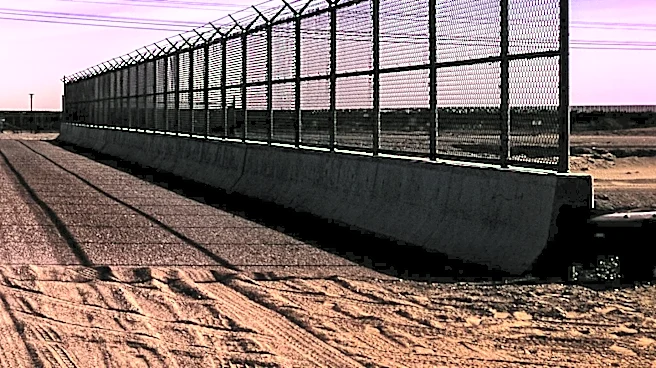
extensive land clearing by bulldozers and heavy equipment across various parts of the park, including the Santa Elena Canyon and the remote Mariscal Mountain area. U.S. Customs and Border Protection Commissioner Rodney Scott announced the pause, stating he would conduct a personal evaluation of the site. The construction involves building new 'patrol roads' and installing 17 miles of steel vehicle barriers, not a 30-foot steel wall as previously clarified by Scott. The Trump administration had waived numerous environmental laws in June that would typically apply to such construction within a national park. Southwest Valley Constructors was awarded a $1.7 billion contract in May for the Big Bend National Park project. A local indigenous group recently sought a temporary block on construction from a federal judge.
Why It's Important?
This pause in construction is significant as it highlights the impact of public and legal challenges on federal infrastructure projects, particularly those affecting protected national lands. Big Bend National Park is a 'crown jewel' national park, and the proposed construction has raised concerns about irreversible environmental damage and the preservation of natural landscapes. The situation underscores the ongoing tension between national security objectives, as defined by the Trump administration's border policies, and environmental conservation efforts. The involvement of advocacy groups like the Center for Biological Diversity and local indigenous communities demonstrates a broad-based opposition to the project, emphasizing the cultural and ecological value of the park. The legal battles also set precedents for how environmental regulations and indigenous rights are considered in large-scale government projects, potentially influencing future infrastructure developments across the U.S. The economic implications for contractors like Southwest Valley Constructors, holding a $1.7 billion contract, are also considerable, as delays or cancellations could impact their operations and financial outlook.
What's Next?
U.S. Customs and Border Protection Commissioner Rodney Scott is scheduled to visit Big Bend National Park for a 'personal evaluation' of the terrain and to engage with local law enforcement and other stakeholders. While construction is currently paused, advocates like Laiken Jordahl from the Center for Biological Diversity warn that it could resume at any moment, indicating continued vigilance from environmental groups. The legal challenges against the Trump administration's border plans in Big Bend National Park and the broader Big Bend region are ongoing, with a federal judge yet to rule on a local indigenous group's request for a temporary block on construction. The outcome of Scott's evaluation and the pending legal decisions will determine the future of the project. Stakeholders, including environmental activists, local communities, and government officials, will be closely monitoring these developments, and further protests or legal actions are possible depending on the administration's next steps.
Beyond the Headlines
The controversy surrounding border construction in Big Bend National Park extends beyond immediate environmental concerns, touching upon deeper ethical and cultural dimensions. The waiver of environmental laws for this project raises questions about the balance of executive power versus legislative and regulatory oversight, particularly concerning protected national treasures. The involvement of indigenous groups in legal challenges highlights the often-overlooked cultural heritage and ancestral lands impacted by such developments. This situation could trigger long-term shifts in how national parks are managed and protected from federal projects, potentially leading to increased scrutiny and public engagement in future land-use decisions. It also underscores the broader debate about the effectiveness and necessity of physical border barriers versus alternative security measures, and the societal cost of such infrastructure on natural ecosystems and local communities. The public outcry and legal actions reflect a growing national sentiment that prioritizes environmental preservation and indigenous rights, potentially influencing future policy-making regarding federal lands.