
What's Happening?
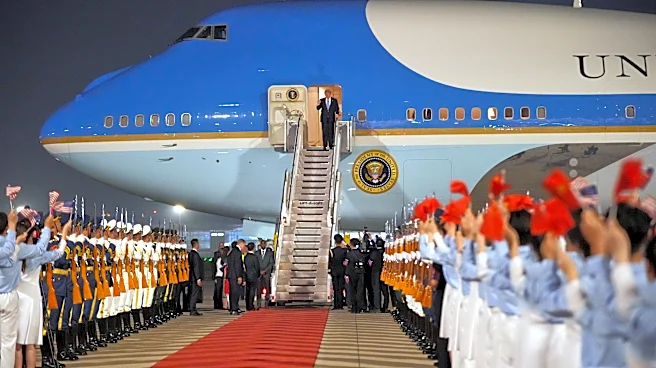
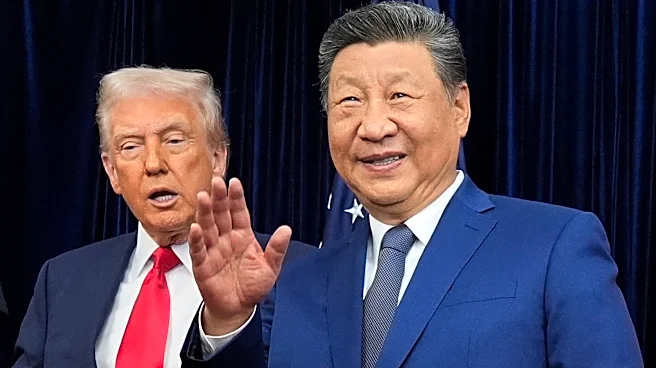
During a high-stakes summit in Beijing, President Trump and Chinese President Xi Jinping engaged in discussions that prominently featured Taiwan, a contentious issue in U.S.-China relations. The summit,
which marks President Trump's first visit to China since 2017, has been closely watched by Taiwanese media, particularly regarding the language used in diplomatic communications. The U.S. has historically maintained a nuanced stance on Taiwan, avoiding explicit support for Taiwanese independence while continuing arms sales to the island. President Trump indicated a willingness to discuss these arms sales with President Xi, a move that Taiwan's Central News Agency suggests could challenge a core tenet of U.S. policy. Taiwan's Ministry of Foreign Affairs has emphasized its ongoing communication with Washington to protect its interests.
Why It's Important?
The discussions between President Trump and President Xi are significant as they could influence the future of U.S.-China relations, particularly concerning Taiwan. The U.S. has long been a key arms supplier to Taiwan, a practice that Beijing opposes. Any shift in this policy could alter the balance of power in the Asia-Pacific region and affect U.S. strategic interests. The summit also highlights the delicate nature of diplomatic language and the potential for misinterpretation or policy shifts that could impact regional stability. For Taiwan, maintaining U.S. support is crucial for its security and international standing, while for China, reducing U.S. arms sales to Taiwan could be seen as a diplomatic victory.
What's Next?
The outcome of the summit could lead to changes in U.S. policy towards Taiwan, depending on the discussions between the two leaders. Any concessions made by President Trump regarding arms sales could prompt reactions from U.S. lawmakers and allies in the region. Additionally, Taiwan will likely continue to seek assurances from the U.S. to safeguard its interests. The broader implications for U.S.-China relations will depend on how both countries navigate this sensitive issue, with potential impacts on trade and regional security dynamics.