







What's Happening?
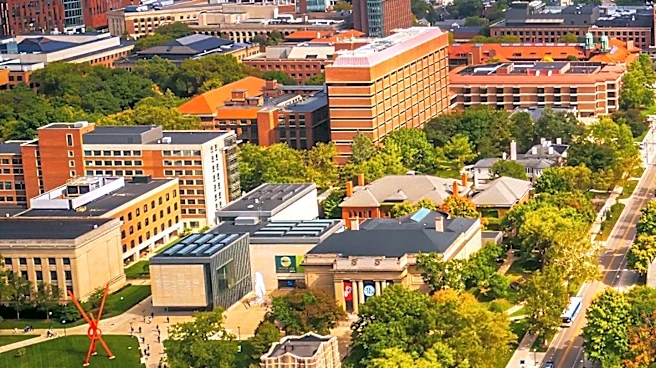
The University of Michigan and Michigan State University are hosting a 'Piss Off' event in Ann Arbor this Saturday, coinciding with their annual rivalry football game. Wastewater research scientists from both institutions are competing to see which school
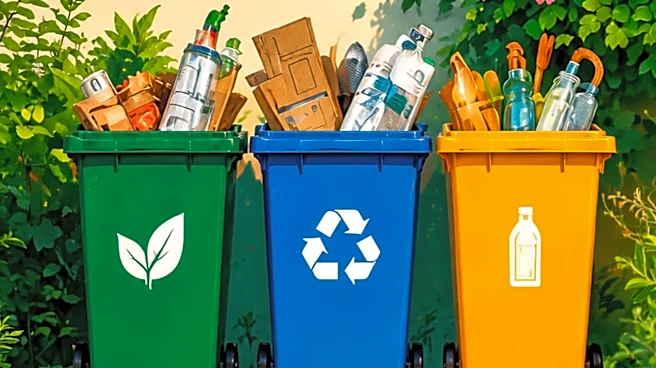
can collect the most urine. Two yurts will be set up at the Ann Arbor Golf Club, across from the Big House, where volunteers will direct fans and tailgaters to contribute based on their university loyalties. The initiative, known as 'peecycling,' aims to collect urine for conversion into nutrient-rich fertilizer. According to Michigan State Associate Professor of Sociology Stephen Gasteyer, the event serves a dual purpose: to gather raw material for fertilizer production and to educate the public about the potential of urine as a natural nutrient source. The project is partly funded by a University Research Council Grant awarded to Gasteyer and Sociology Assistant Professor Saleh Amed.
Why It's Important?
This 'Piss Off' event highlights an innovative approach to sustainable resource management and wastewater treatment. By converting urine into fertilizer, the project addresses several environmental concerns. It reduces the energy and resources typically used in conventional wastewater treatment processes, which often dispose of valuable nutrients. Furthermore, it promotes the concept of a circular economy by repurposing a waste product into a beneficial agricultural input. Although current U.S. regulations restrict the use of urine on food crops, it can be effectively used for other applications like grass and flower fields, demonstrating its immediate practical value. The educational aspect of the event is crucial for raising public awareness about the potential of 'peecycling' and encouraging broader adoption of sustainable practices in waste management and agriculture.
What's Next?
The urine collected during the 'Piss Off' event will be used by Dr. Nancy Love's lab at the University of Michigan, a civil and environmental engineer, to optimize the process of converting urine into fertilizer. Her department houses the nation's first university-based end-to-end peecycling demo system, which includes a new toilet designed for urine separation expected to hit the market later this year. Once the fertilizer is produced, it is slated for use in agricultural fields at both the University of Michigan and Michigan State University, including Michigan State's Kellogg Biological Center and the University of Michigan's Matthaei Botanical Gardens. The success of this event and the subsequent research could pave the way for wider implementation of urine-to-fertilizer programs, potentially influencing future wastewater management policies and agricultural practices in the U.S.
Beyond the Headlines
The 'Piss Off' competition subtly challenges societal norms and perceptions surrounding human waste, reframing urine from a discarded byproduct to a valuable resource. This initiative taps into the competitive spirit of a major collegiate rivalry to promote environmental stewardship, demonstrating how unconventional approaches can engage the public in scientific and sustainability efforts. The project also underscores the interdisciplinary nature of environmental solutions, combining sociology, engineering, and agricultural science. The development of specialized toilets for urine separation signifies a potential shift in plumbing and sanitation infrastructure, moving towards more resource-efficient systems. This broader movement towards 'peecycling' could eventually influence public health regulations and agricultural standards, fostering a more sustainable relationship between human activity and natural resource cycles.