






What's Happening?
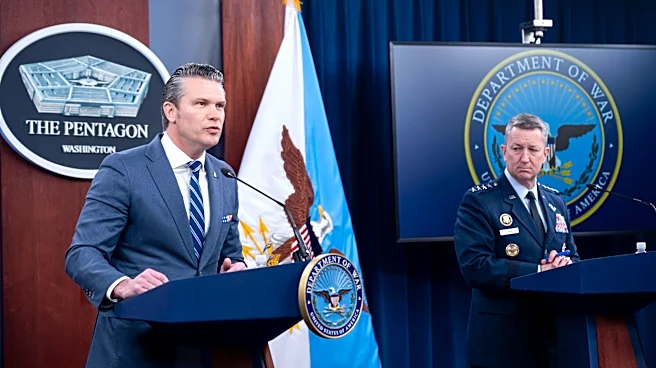
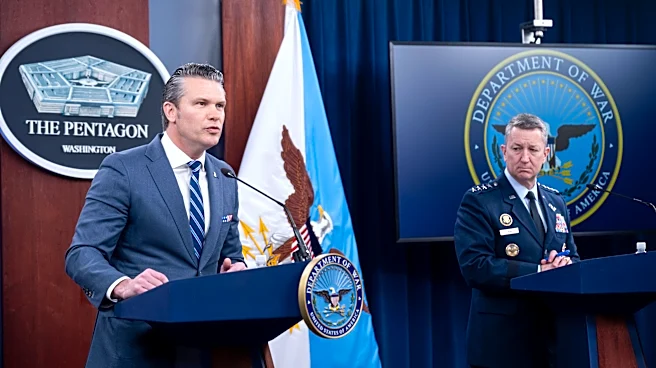
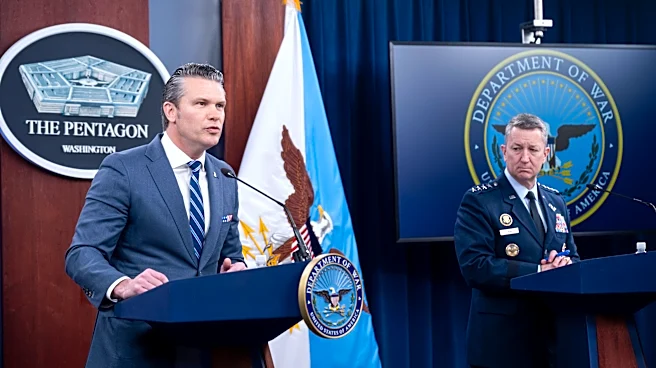
Defense Secretary Pete Hegseth is set to face questions from lawmakers for the first time since the U.S. entered into a conflict with Iran over two months ago. The hearing, held by the House Armed Services Committee, is seen by Democrats as a critical
opportunity to hold the administration accountable for what they describe as an 'undefined' and 'unauthorized' war. The session, ostensibly about the 2027 defense budget request, is expected to cover a range of topics including the Iran war, the deployment of National Guard troops, and the proposed increase in the Pentagon budget. Democrats, led by figures such as Rep. Sarah Elfreth and Rep. Pat Ryan, plan to press Hegseth on the costs, goals, and exit strategy of the Iran conflict, as well as the implications of a record $1.5 trillion defense budget request.
Why It's Important?
The hearing is significant as it represents a rare public forum for lawmakers to question the administration's military strategy and fiscal priorities. The Iran conflict, which began under President Trump's administration, has raised concerns about its financial burden on taxpayers and its strategic objectives. The proposed increase in the defense budget, amid a $39 trillion national debt and substantial tax cuts, further complicates the fiscal landscape. The session underscores the broader debate over military spending and accountability, with potential implications for U.S. foreign policy and domestic economic priorities. The outcome could influence future legislative actions and public opinion on military engagements and defense spending.
What's Next?
Following the hearing, lawmakers may pursue further inquiries or legislative measures to address the concerns raised. The administration's response to the scrutiny could shape future defense policies and budget allocations. Additionally, the hearing's findings might impact the political landscape, influencing voter sentiment and party strategies ahead of upcoming elections. Stakeholders, including defense contractors and military personnel, will be closely monitoring the developments for potential changes in funding and operational directives.