
What's Happening?
Heidelberg Materials Northern Europe is advancing its decarbonization efforts with the development of a new methanol-powered cement carrier. This vessel, set to enter service in early 2028, is designed
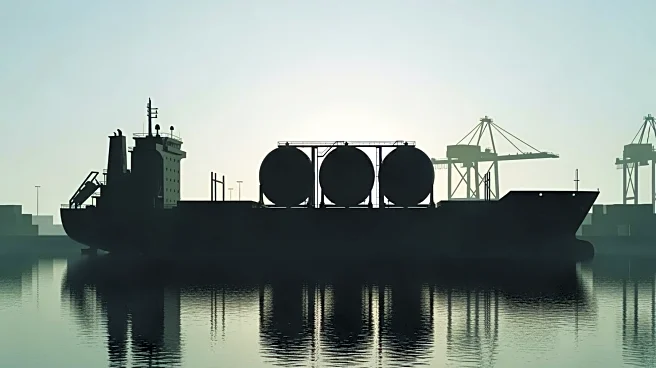
to reduce emissions by 80% compared to traditional diesel-powered ships. The project is a collaboration between Heidelberg Materials, the Hartmann Group, the Green Shipping Programme (GSP), and the Norwegian NOx Fund. The vessel will operate along Norwegian coastal routes, supplying low-emission cement from Brevik to major markets such as Oslo and Bergen. With a cargo capacity of approximately 9,000 tons, the ship will carry 1,000 tons more than its predecessor while consuming less energy. The dual-fuel methanol/diesel propulsion system allows for flexibility in fuel use, depending on methanol availability and cost.
Why It's Important?
This initiative is significant as it represents a major step towards reducing the carbon footprint of maritime logistics, a critical component of Heidelberg Materials' supply chain. By cutting emissions by 80%, the vessel supports the company's broader decarbonization strategy, which includes cleaner cement production through carbon capture technologies. The project also highlights the role of public-private partnerships in advancing sustainable shipping solutions. Financial support from the Norwegian NOx Fund and the collaborative efforts of the GSP demonstrate how industry and government can work together to drive innovation in low-emission transport. This development could set a precedent for other industries to follow, potentially leading to widespread adoption of similar technologies in maritime logistics.
What's Next?
The successful deployment of this methanol-powered vessel could encourage further investments in low-emission maritime technologies. Heidelberg Materials and its partners may continue to explore additional opportunities to expand their fleet of eco-friendly vessels. The project could also inspire other companies to adopt similar strategies, potentially leading to a broader shift towards sustainable logistics in the maritime industry. As the vessel enters service, stakeholders will likely monitor its performance closely to assess its impact on emissions and operational efficiency. The outcomes could influence future regulatory policies and industry standards related to maritime emissions.
Beyond the Headlines
The development of this methanol-powered vessel underscores the growing importance of sustainable practices in the maritime industry. It reflects a broader trend towards integrating environmental considerations into business operations, driven by both regulatory pressures and consumer demand for greener products. The project also highlights the potential for methanol as a viable alternative fuel in the shipping sector, offering a scalable solution for reducing emissions. As more companies recognize the benefits of sustainable logistics, there could be increased investment in research and development of new technologies to further enhance the environmental performance of maritime transport.