





What's Happening?
The Virginia Department of Environmental Quality (DEQ) is set to begin a long-awaited study on the health impacts of coal dust in communities near coal terminals in Norfolk and Newport News. The DEQ recently announced it is accepting contract bids for
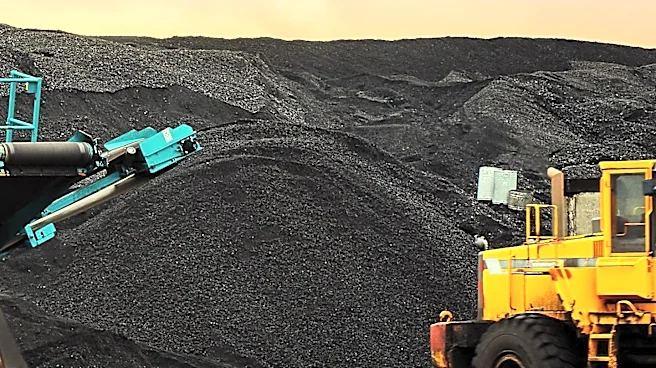
the study, which will involve installing three monitoring sites in Norfolk and two in Newport News. These sites will measure and analyze toxic metals and particulates in the air to assess potential health risks. The study, named the Tidewater Air Monitoring Evaluation (TAME) project, aims to provide crucial data to understand the extent of residents' exposure to coal dust, its health effects, and necessary mitigation actions. This initiative comes after years of residents' concerns and previous studies that often concluded the dust was not a serious health risk based on federal standards, despite visible evidence and higher rates of respiratory illnesses in affected areas.
Why It's Important?
This study is important because it addresses long-standing environmental justice concerns in communities disproportionately affected by industrial pollution. Residents living near the coal terminals have reported constant exposure to coal dust, which coats their homes and vehicles, and have experienced higher rates of asthma and other chronic diseases. Previous studies, while adhering to federal environmental standards, failed to alleviate these concerns or provide actionable solutions. The new study, funded by a $526,603 grant from the federal Environmental Protection Agency, could provide updated data that challenges existing federal standards or highlights their inadequacy in addressing long-term, cumulative exposure. The findings could lead to significant policy changes regarding air quality regulations, industrial practices, and public health interventions, potentially improving the quality of life and health outcomes for thousands of residents in Norfolk and Newport News.
What's Next?
The DEQ plans to commence work on the study 60 days after a bid is awarded. This timeline suggests that monitoring sites will be established and data collection will begin in the coming months. Following the data collection and analysis, the TAME project is expected to provide comprehensive answers regarding the health impacts of coal dust. The results could prompt the DEQ and other regulatory bodies to re-evaluate current environmental standards, implement stricter controls on coal handling and transportation, or develop new public health strategies for affected communities. Stakeholders, including local residents, environmental advocacy groups, and coal terminal operators, will likely closely monitor the study's progress and findings, potentially leading to further calls for action or legal challenges depending on the outcomes.
Beyond the Headlines
Beyond the immediate health implications, this study touches upon broader issues of environmental equity and the effectiveness of federal regulatory frameworks. The discrepancy between residents' lived experiences and previous study conclusions based on federal standards highlights a potential gap in how environmental risks are assessed, particularly for vulnerable populations with continuous, low-level exposure to pollutants. The TAME project could serve as a model for re-evaluating environmental standards to better account for cumulative exposure and long-term health effects. Furthermore, it underscores the persistent challenge of balancing industrial economic activity with community health and environmental protection, particularly in port cities that serve as critical hubs for national and international trade. The outcome could influence future infrastructure development and environmental policy decisions across the U.S., emphasizing the need for more nuanced and community-centric approaches to environmental regulation.