






What's Happening?
A U.S. Immigration and Customs Enforcement (ICE) officer, Christian Castro, has pleaded not guilty to charges of lying to investigators regarding the circumstances of a shooting incident involving a Venezuelan man, Julio Cesar Sosa-Celis, during an immigration
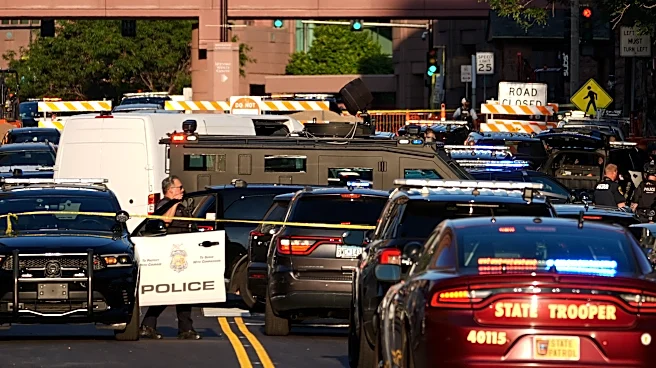
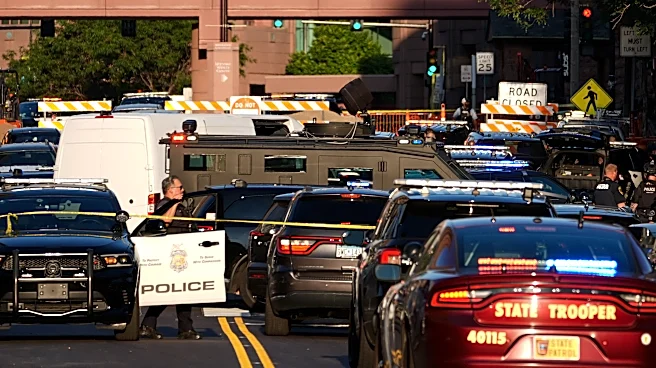
crackdown in Minnesota last winter. Castro was ordered released from federal custody on Friday, with a $75,000 unsecured bond and a GPS ankle monitor. The federal indictment alleges that Castro falsely claimed he was attacked with a broom and shovel before he opened fire, injuring Sosa-Celis in January. This prosecution marks the first time a federal officer has been charged by the Justice Department for actions taken during this year's Operation Metro Surge, which led to widespread protests and arrests in the Twin Cities. Minnesota officials have also separately charged Castro with assault and false reporting of a crime related to the nonfatal shooting. Federal prosecutors had initially charged Sosa-Celis and another man with assault, but these charges were dropped after video evidence contradicted Castro's account.
Why It's Important?
This case is highly significant as it represents a rare instance of a federal officer being prosecuted by the Justice Department for actions during an immigration operation. It raises critical questions about accountability within federal law enforcement agencies and the integrity of official reports, particularly in sensitive operations like immigration crackdowns. The allegations of an officer fabricating details to justify a shooting could erode public trust in law enforcement and fuel ongoing debates about police conduct and oversight. The fact that initial charges against the Venezuelan man were dropped due to video evidence underscores the importance of transparency and independent investigation in such incidents. Furthermore, the internal turmoil within the Justice Department, with a prosecutor alleging higher-ups blocked more serious civil rights charges, highlights potential systemic issues in how such cases are handled and the challenges in pursuing justice against federal agents.
What's Next?
Christian Castro will proceed with his legal defense, aiming to clear his name in court. The federal prosecution will continue, and the outcome of this case could set a precedent for future accountability of federal officers involved in similar incidents. Meanwhile, Julio Cesar Sosa-Celis's lawyer is pushing for stiffer charges against Castro and plans to seek damages from the federal government, indicating that civil litigation may follow the criminal proceedings. The American Civil Liberties Union of Minnesota has also expressed support for Sosa-Celis's pursuit of damages. The ongoing civil rights investigation mentioned by a person familiar with the case suggests that additional charges against Castro, potentially more severe, could still be brought. The Justice Department is also investigating the prosecutor who accused higher-ups of interference, which could lead to further internal repercussions and scrutiny of the department's handling of the case.
Beyond the Headlines
This case delves into the complex and often contentious intersection of immigration enforcement, civil rights, and federal accountability. The allegations against Christian Castro, particularly the claim of fabricating an attack to justify a shooting, highlight the immense power wielded by law enforcement officers and the potential for abuse. It also brings to light the vulnerability of individuals, especially those in marginalized communities, during immigration operations. The internal dispute within the Justice Department regarding the pursuit of civil rights charges against Castro suggests a deeper struggle over the interpretation and enforcement of justice within federal agencies. This incident could contribute to broader discussions about the need for independent oversight mechanisms for federal law enforcement, the role of video evidence in ensuring accountability, and the protection of civil liberties during immigration enforcement actions. The outcome of this case could influence public perception of ICE and shape future policies regarding the conduct of federal agents.