




What's Happening?
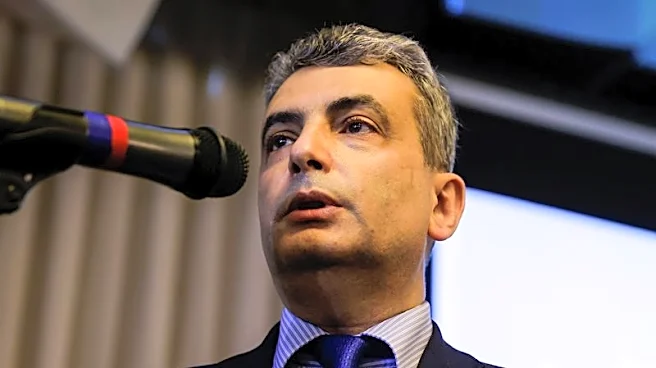
Andrey Klepach, the chief economist at Russia’s state development bank VEB, has been removed from his position. This dismissal follows the public release of a speech he delivered in May, where he warned that Russia's economy was being significantly harmed
by the ongoing conflict in Ukraine. Klepach stated that Russia was falling behind in technological and economic competition globally, even compared to Ukraine, which receives substantial Western financial support. He predicted that the economic challenges would lead to a social crisis and criticized the deteriorating quality of governance in Russia, citing poorly justified decisions with long-term strategic consequences. The Russian central bank had also suggested in June that the economy might not grow at all this year, contrasting with President Vladimir Putin's assurances of economic stability. Klepach's critique, published on the website of the Nikitsky Club, represented a rare public dissent from a senior figure within a state institution regarding the costs of the war.
Why It's Important?
The ousting of a prominent economist for expressing concerns about the war's economic impact highlights the Kremlin's sensitivity to internal criticism and its efforts to control the narrative surrounding the conflict. This event suggests a potential suppression of dissenting economic analyses within Russia, which could lead to a less transparent and potentially less effective response to economic challenges. For the U.S. and its allies, this development underscores the effectiveness of Western sanctions and Ukraine's strategy in targeting Russian infrastructure, as acknowledged by Klepach. It also indicates that despite official pronouncements, the economic strain on Russia is significant, potentially impacting its long-term stability and capacity to sustain the war effort. The predicted social crisis could have broader implications for regional stability and international relations, as internal pressures might influence Russia's foreign policy decisions.
What's Next?
Following Klepach's dismissal, VEB is expected to appoint a successor, who has reportedly already been selected. This new appointment will likely align more closely with the official narrative of economic stability, potentially further stifling open economic discourse within state institutions. The Russian government will likely continue its efforts to project an image of economic resilience, while internally managing the growing costs of the war. International observers will be watching for further signs of economic strain in Russia, such as changes in GDP growth, inflation rates, and public sentiment, which could indicate the onset of the social crisis Klepach predicted. The U.S. and its allies will likely continue to monitor these economic indicators as they assess the impact of their sanctions and formulate future policy regarding Russia.
Beyond the Headlines
Klepach's removal points to a deeper issue of intellectual freedom and the suppression of critical analysis within authoritarian regimes, particularly during times of conflict. His warnings about deteriorating governance and poorly justified decisions suggest a systemic problem that extends beyond economic policy, potentially affecting various sectors of Russian society. The incident also highlights the inherent tension between political objectives and economic realities, where the pursuit of military goals can override sound economic principles. This dynamic could lead to long-term structural weaknesses in the Russian economy, making it more vulnerable to future shocks. Furthermore, the lack of open debate and critical feedback loops could hinder Russia's ability to adapt to evolving global economic conditions, potentially leading to a widening gap with more open and innovative economies.