


What's Happening?
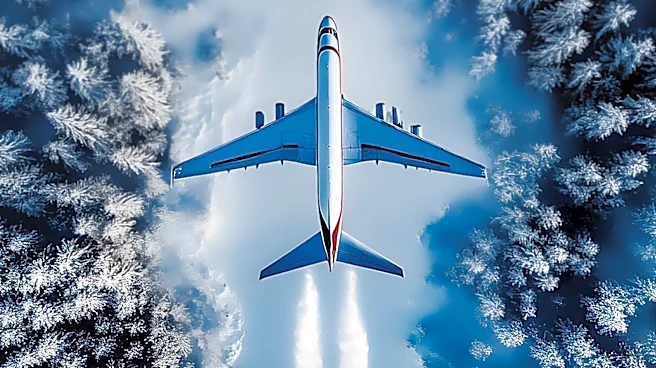
President Trump's recent departure from Ankara, Turkey, involved a transfer from Air Force One to a smaller plane via a catering truck, following Israeli intelligence warnings of a potential shoulder-fired missile attack by Iranians. This incident, which
has been widely mocked online, is being viewed by some as a serious indicator of the U.S. military's current state of readiness and its understanding of modern warfare. Despite Air Force One's defensive systems designed to counter such threats, the need for a clandestine transfer suggests a perceived vulnerability. Critics argue that this event highlights a disconnect between the President's perception of military strength and the evolving nature of asymmetrical warfare, where less powerful adversaries utilize unconventional means like drones and shoulder-fired missiles to challenge conventional military might. The incident occurred amidst ongoing discussions about the U.S. war with Iran and the effectiveness of current military strategies.
Why It's Important?
This event is important because it underscores a critical debate within U.S. national security circles regarding the country's military strategy and its adaptation to contemporary threats. The perceived need for President Trump to use a catering truck for a transfer, despite the advanced capabilities of Air Force One, raises questions about the U.S. military's ability to protect its highest-ranking officials in hostile environments. It also highlights a broader concern that the U.S. military may be overly focused on traditional, large-scale warfare, as opposed to the asymmetrical tactics increasingly employed by adversaries. This could have significant implications for U.S. foreign policy and defense spending, potentially leading to calls for a re-evaluation of military priorities and investments in new technologies. The incident could also impact international perceptions of U.S. military invincibility, potentially emboldening adversaries and complicating diplomatic efforts.
What's Next?
The incident is likely to fuel further debate and scrutiny regarding U.S. military readiness and strategic planning, particularly concerning drone warfare and asymmetrical threats. There may be increased pressure on the Pentagon and Congress to re-evaluate defense spending and prioritize investments in technologies and strategies that address modern warfare challenges. Discussions about the effectiveness of current military leadership and the need for a more adaptive approach to defense are also anticipated. Furthermore, the event could influence public opinion and political discourse leading up to future elections, with national security and military preparedness becoming key campaign issues. The U.S. may also seek to strengthen intelligence sharing and collaboration with allies to better anticipate and counter evolving threats.
Beyond the Headlines
Beyond the immediate concerns of military preparedness, this incident touches upon deeper implications regarding the psychological and symbolic aspects of warfare. The image of a U.S. President being covertly moved in a catering truck, regardless of the actual threat level, can be interpreted as a blow to the perception of American power and invulnerability. This symbolic impact could have long-term consequences for U.S. influence on the global stage. It also highlights the ethical and strategic dilemmas posed by asymmetrical warfare, where the lines between conventional combatants and non-state actors become blurred. The incident may also prompt a re-examination of the role of intelligence agencies in assessing and mitigating threats, as well as the communication protocols surrounding high-profile security risks. The broader cultural implications include a potential shift in how the public views military strength and the effectiveness of traditional defense mechanisms in an increasingly complex global security landscape.