



What's Happening?
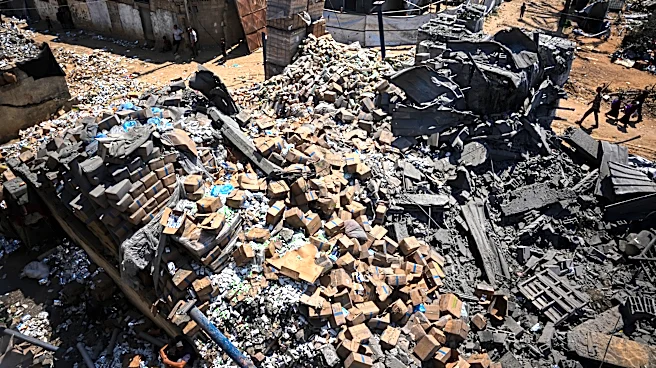
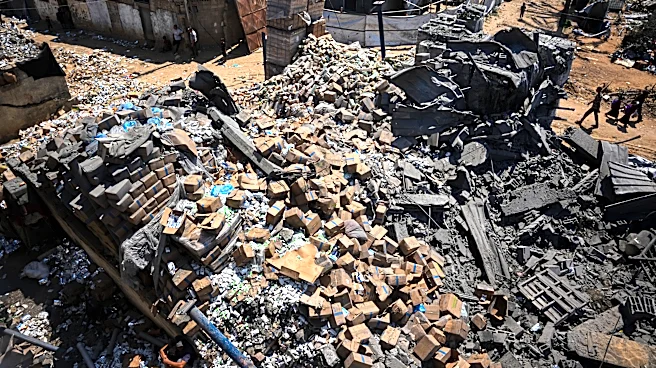
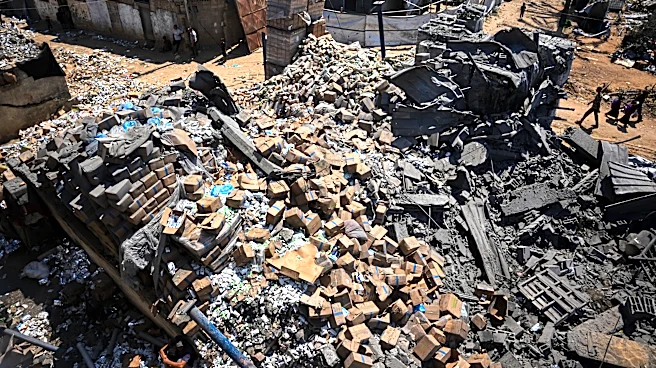
Shadi al-Barawi, a barber from Gaza City, continues to work and support his family from a cramped displacement tent after losing his right leg due to shrapnel from an Israeli strike on the Sheikh Radwan neighborhood. His salon was destroyed in the conflict,
and his profession has transformed from a stable income source to a daily struggle for survival. Al-Barawi now operates a small barbershop within the al-Maqousa displacement camp, where he and his family have sought shelter. He describes the immense difficulty in meeting his children's needs with his limited income, often earning barely enough for basic necessities. The injury, which required amputation above the knee, has made daily life and movement extremely challenging. Al-Barawi is the sole provider for his six-member household and five sisters, as his father was killed at the start of the war.
Why It's Important?
Al-Barawi's story highlights the severe humanitarian crisis and the profound personal toll of the conflict in Gaza. His resilience in the face of devastating loss underscores the determination of many Palestinians to maintain their livelihoods and provide for their families amidst unimaginable circumstances. The narrative also sheds light on the broader issue of a rapidly growing population of amputees in Gaza, with the Health Ministry reporting over 6,000 cases since October 2023. This surge in injuries places immense strain on an already crippled healthcare system, with significant obstacles to providing prosthetics and rehabilitation services. The story emphasizes the critical need for medical and technical supplies, which are severely restricted, hindering the ability of centers like Gaza’s Artificial Limbs and Polio Center to meet the rising demand, especially for children who constitute a significant portion of amputees.
What's Next?
The immediate future for Shadi al-Barawi involves continuing his barber trade from his tent, striving to earn enough to sustain his family. His personal journey will focus on regaining strength and adapting to his new reality, relying on his determination despite physical and financial hardships. For the wider community in Gaza, the challenge of providing adequate care for thousands of amputees remains critical. The Artificial Limbs and Polio Center, and similar organizations, will continue to face severe shortages of essential materials and equipment due to ongoing restrictions and the siege. Addressing these needs will require significant international aid and a lifting of restrictions on medical supplies to prevent further suffering and enable rehabilitation for those with life-altering injuries.
Beyond the Headlines
Al-Barawi's experience transcends individual hardship, symbolizing the broader human cost of conflict and the struggle for dignity in displacement. The destruction of infrastructure, including health facilities, and the ongoing restrictions on essential supplies create a cycle of suffering that extends far beyond immediate injuries. The story implicitly raises questions about accountability for civilian casualties and the long-term impact of conflict on public health and social welfare. The sheer number of amputations, particularly among children, points to a generation that will bear the physical and psychological scars of war for decades. This situation underscores the urgent need for sustained humanitarian intervention, robust rehabilitation programs, and a political resolution that addresses the root causes of the conflict, ensuring access to healthcare and the basic necessities for a dignified life.