


What's Happening?
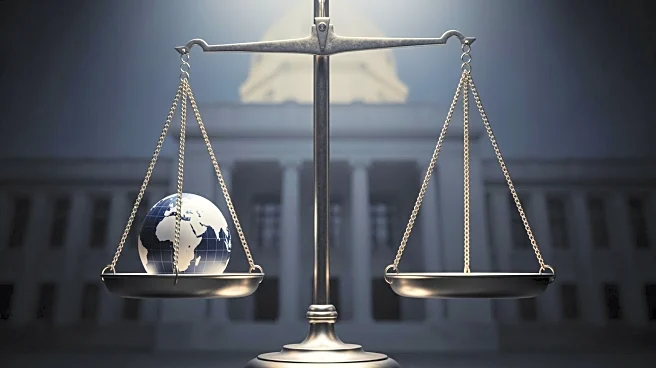
The Supreme Court has invalidated tariffs imposed by President Trump, ruling that the power to impose taxes, including tariffs, resides with Congress, not the president. This decision was delivered by Chief Justice John Roberts, who wrote for a 6-to-3
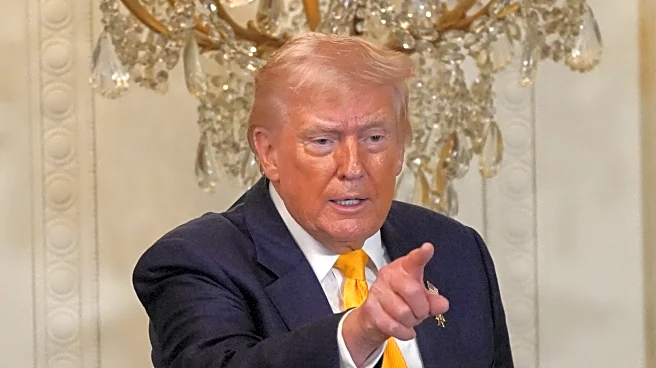
majority. The ruling comes after Trump had signed an executive order allowing him to impose a wide range of tariffs on U.S. trading partners, which were primarily paid by U.S. businesses. In response, President Trump criticized the court's conservative justices, including his own appointees, calling them 'disloyal' and 'unpatriotic.' Despite the ruling, Trump plans to continue imposing tariffs using alternative statutes, although these are limited in scope and duration.
Why It's Important?
The Supreme Court's decision has significant implications for U.S. businesses and the economy. The tariffs, which have been generating approximately $30 billion a month, were intended to offset tax cuts passed by Congress. With half of these tariffs now eliminated, there could be a larger federal deficit. The ruling underscores the constitutional separation of powers, reinforcing Congress's role in taxation. For businesses, the decision could mean relief from the financial burden of tariffs, although the potential for new tariffs under different statutes remains. The market's stable reaction suggests investors anticipate alternative measures from the White House.
What's Next?
The next steps involve determining whether businesses that paid the tariffs can receive refunds. The Supreme Court did not address this, leaving it to lower courts to decide. The National Retail Federation has called for a seamless refund process. Meanwhile, President Trump is expected to explore other legal avenues to impose tariffs, though these options are more constrained. The decision also highlights divisions within the Supreme Court, with multiple concurring and dissenting opinions reflecting differing judicial philosophies.