




What's Happening?
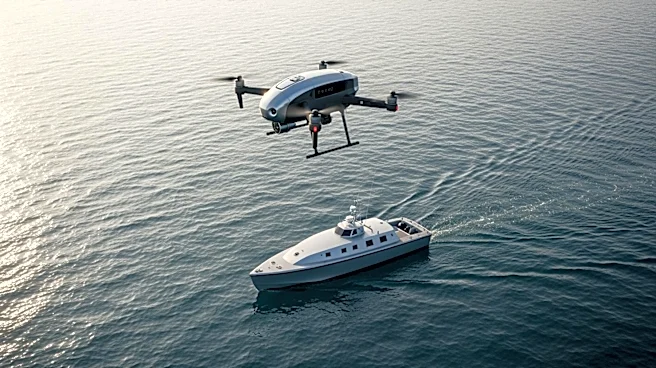
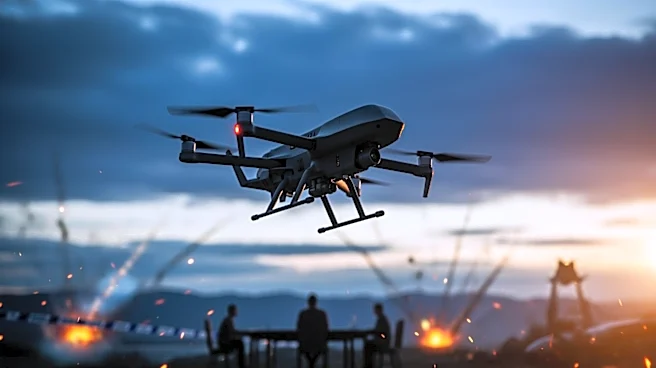
In a groundbreaking test, U.S. Marines and Naval Special Warfare operators launched a first-person view (FPV) drone from a boat to strike an unmanned vessel in the Pacific. The exercise, conducted by the III Expeditionary Operations Training Group from Okinawa,
Japan, demonstrated the Marines' ability to design and deploy innovative unmanned systems. The test highlights the integration of new technologies in military operations, showcasing the potential for enhanced maritime capabilities.
Why It's Important?
This successful test marks a significant advancement in military technology, emphasizing the growing role of unmanned systems in modern warfare. The ability to deploy drones for maritime operations enhances the U.S. military's strategic capabilities, particularly in contested environments like the Pacific. This development could influence future military strategies and procurement decisions, as the U.S. seeks to maintain a technological edge over potential adversaries. The test also underscores the importance of innovation and adaptability in military training and operations.
Beyond the Headlines
The test reflects broader trends in military innovation, where the focus is increasingly on autonomous and remotely operated systems. This shift has implications for military doctrine, training, and resource allocation. The ability to rapidly develop and deploy such systems could redefine the nature of military engagements, particularly in regions with complex geopolitical dynamics. The test also raises questions about the ethical and legal considerations of using unmanned systems in combat, which will need to be addressed as these technologies become more prevalent.