







What's Happening?
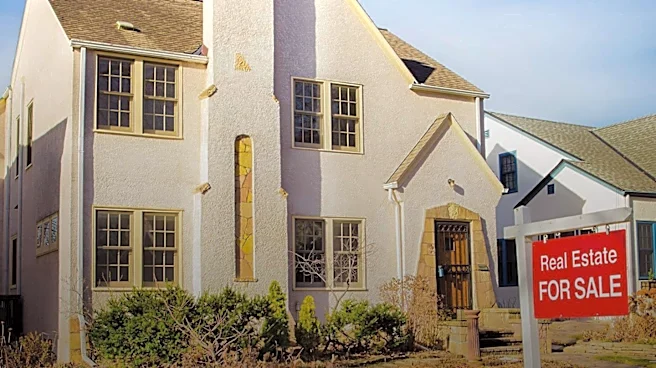
The concept of the American Dream house has evolved over the decades, with a growing number of Americans, particularly Millennials and Gen Z, favoring smaller, more walkable communities over the traditional large suburban homes. This shift is partly due
to the high cost of real estate, making homeownership a distant dream for many. The term 'missing middle housing,' coined by architect Daniel Parolek, highlights the lack of medium-density housing options like row houses, which are smaller and more affordable than single-family homes. Despite their benefits, such as reduced heating and cooling costs and efficient land use, row houses face zoning challenges and a perception issue, being seen as less prestigious than detached homes. Historically, the 20th century saw a trend towards larger homes, driven by government policies and the perception of homes as financial assets. However, the current trend suggests a preference for community-oriented living spaces.
Why It's Important?
This shift in housing preferences reflects broader societal changes in how Americans view homeownership and community living. The demand for smaller, more affordable housing options could influence urban planning and zoning laws, potentially leading to more sustainable and inclusive housing developments. This trend also highlights economic challenges, as high real estate prices push many out of the traditional housing market. The preference for walkable communities suggests a move towards more environmentally friendly and socially connected living spaces, which could impact future housing policies and development strategies. The real estate industry may need to adapt to these changing preferences to meet the needs of younger generations.
What's Next?
Urban planners and policymakers may need to address zoning laws that currently favor larger, detached homes to accommodate the growing demand for medium-density housing. This could involve revising minimum lot sizes and parking requirements to facilitate the construction of row houses and similar housing types. Additionally, there may be increased investment in developing walkable communities that offer shared spaces and amenities, aligning with the preferences of Millennials and Gen Z. The real estate market might also see a shift in marketing strategies, focusing on the benefits of smaller, community-oriented living spaces.
Beyond the Headlines
The trend towards smaller homes in walkable communities could have long-term implications for urban development and environmental sustainability. By reducing the emphasis on large, resource-intensive homes, cities could lower their carbon footprint and promote more efficient land use. This shift also raises questions about social equity, as access to affordable housing in desirable areas becomes a critical issue. The cultural perception of what constitutes a 'dream home' may continue to evolve, reflecting changing values around community, sustainability, and quality of life.