
What's Happening?
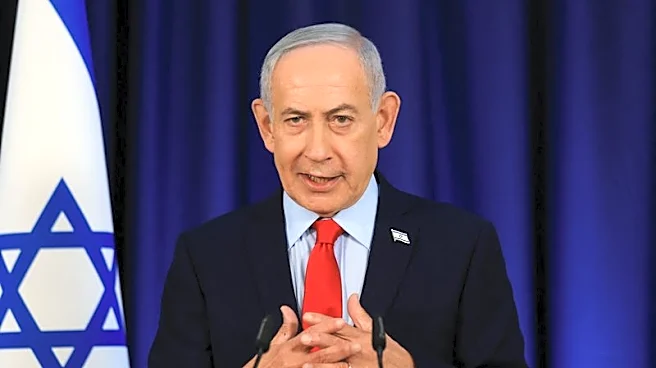
Prime Minister Benjamin Netanyahu's criminal trial has been postponed once again due to security and diplomatic reasons. The Jerusalem District Court canceled his scheduled testimony, which was set for
early next week, following a request from his defense team. The trial, which involves multiple cases including the high-profile Case 4000, has been subject to numerous delays, partly due to wartime conditions and national security issues. The defense is required to provide an update by Thursday on whether circumstances have changed enough to allow the trial to resume. The prosecution aims to challenge Netanyahu's narrative during cross-examination, focusing on allegations of bribery and regulatory benefits tied to favorable media coverage.
Why It's Important?
The trial of Prime Minister Netanyahu is a significant legal and political event in Israel, with implications for his political career and the country's governance. The repeated delays in the trial prolong the legal proceedings, affecting public perception and political stability. The case has become a defining saga of Netanyahu's era, with potential consequences for his leadership and the political landscape in Israel. The outcome of the trial could influence public trust in political institutions and the rule of law, as well as impact Netanyahu's ability to govern effectively.
What's Next?
The court is expected to receive an update from Netanyahu's defense team on Thursday regarding the possibility of resuming the trial. If the trial proceeds, the focus will be on the prosecution's cross-examination, which aims to scrutinize Netanyahu's involvement in the alleged quid pro quo arrangements. The trial's progression will be closely watched by political leaders, legal experts, and the public, as it could have far-reaching implications for Netanyahu's political future and the broader political climate in Israel.