


What's Happening?
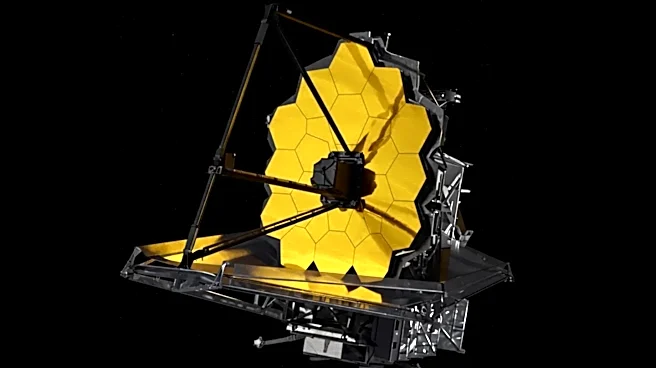
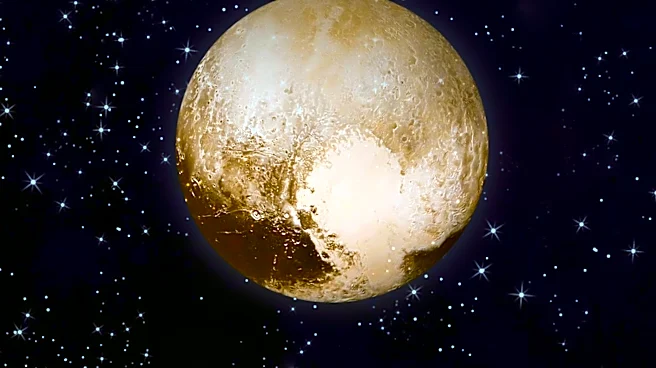
The James Webb Space Telescope (JWST) has detected an unexplained infrared signature on both Pluto and Saturn's moon Titan, suggesting the presence of an unknown compound. This discovery, led by planetary scientist Bruno Bézard from the Paris Observatory,
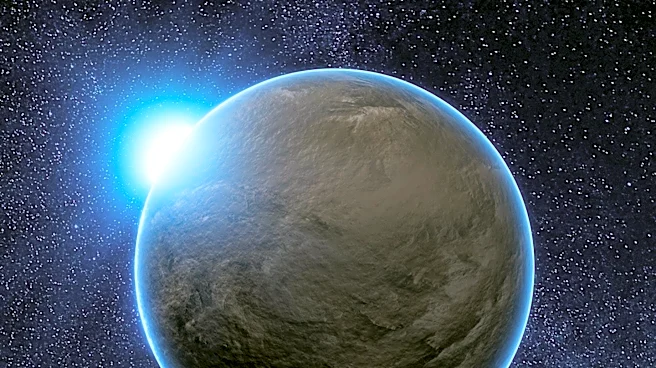
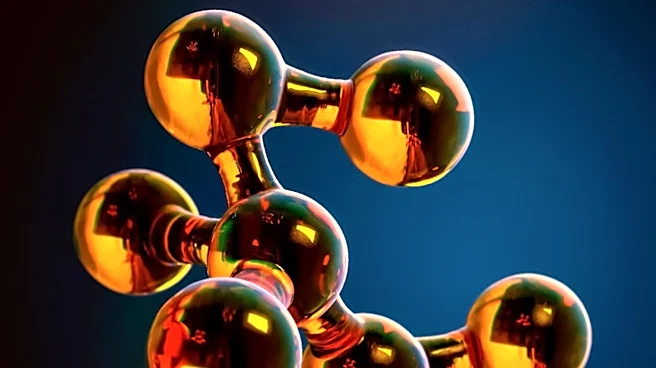
indicates that similar chemical processes may be occurring on these two vastly different celestial bodies. The infrared feature appears at the same wavelength on both Titan and Pluto, absorbing light identically, which points to a potential family of related compounds. The signal was first noticed in Titan's atmosphere in November 2022 and later confirmed on Pluto in May 2023. The exact nature of the compound remains unidentified, but it is speculated to be a type of hydrocarbon, possibly from the allene family, known for strong absorption in the detected range.
Why It's Important?
This discovery is significant as it highlights the potential for complex organic chemistry beyond Earth, which could have implications for understanding prebiotic chemistry in the solar system. The presence of similar chemical signatures on both Titan and Pluto suggests that certain atmospheric processes might be more common than previously thought. This could influence future research directions in planetary science and astrobiology, as scientists seek to understand the conditions that lead to the formation of complex organic molecules. The findings also demonstrate the capabilities of the JWST in identifying chemical compounds across vast distances, which could aid in the search for life-supporting environments on other planets.
What's Next?
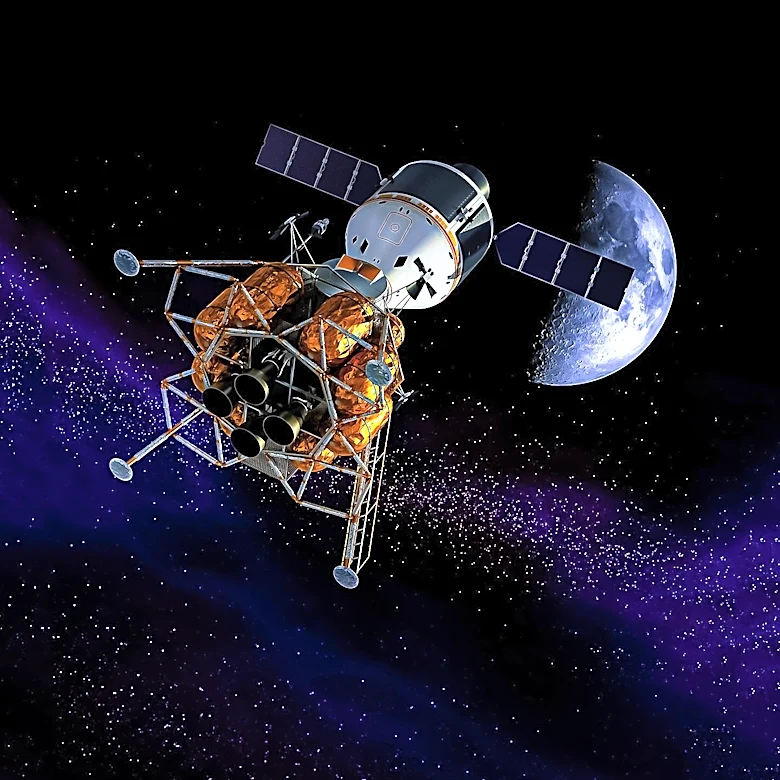
Further analysis of the JWST data is expected to provide more insights into the distribution of the mystery compound across Titan's surface. Researchers are also looking forward to NASA's Dragonfly mission, set to launch in 2028, which will explore Titan's surface and potentially identify the compound through direct sampling. This mission could provide a shortlist of candidate molecules to be studied in laboratories on Earth, helping to confirm the identity of the mystery compound.