








What's Happening?
The United States military has conducted airstrikes targeting Iranian radar and drone control sites following the downing of an American MQ-1 Predator drone by Iran. The strikes, carried out by the U.S. Central Command, occurred around the city of Geruk
and on Qeshm Island. These actions were described as measured and deliberate, responding to aggressive Iranian actions. The U.S. military reported no American casualties. Concurrently, Kuwait intercepted incoming drone and missile fire, believed to be retaliatory strikes from Iran. The situation underscores the fragility of the ceasefire in the ongoing Iran conflict, which has seen repeated violations despite ongoing negotiations between American and Iranian officials.
Why It's Important?
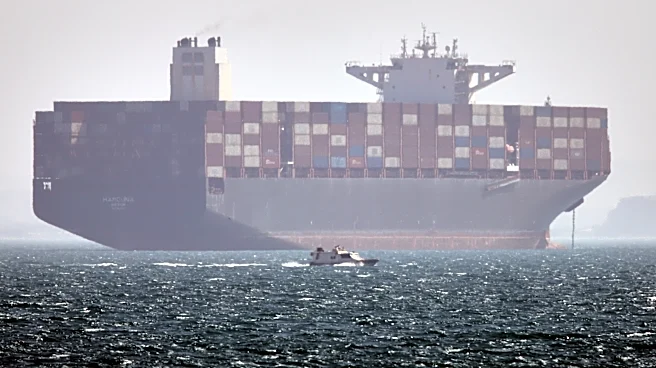
The escalation in military actions between the U.S. and Iran highlights the ongoing volatility in the region, particularly concerning the Strait of Hormuz, a critical chokepoint for global energy supplies. The conflict has implications for international oil and natural gas markets, as disruptions in this area can lead to significant economic impacts worldwide. Additionally, the involvement of Kuwait, a key U.S. ally in the region, further complicates diplomatic relations and underscores the potential for broader regional conflict. The situation also affects global chemical fertilizer supplies, raising concerns about food security due to potential shortages.
What's Next?
Negotiations between the U.S. and Iran are expected to continue, with President Trump expressing optimism about reaching a deal to extend the ceasefire and reopen the Strait of Hormuz. However, the ongoing military exchanges and Iran's stockpile of highly enriched uranium remain significant hurdles. The international community will be closely monitoring these developments, as any agreement could have far-reaching consequences for regional stability and global energy markets. The U.S. administration's next steps will be crucial in determining the trajectory of this conflict.
Beyond the Headlines
The military actions and diplomatic negotiations between the U.S. and Iran could have long-term implications for international relations and security dynamics in the Middle East. The conflict may influence future U.S. foreign policy decisions and military strategies in the region. Additionally, the situation raises ethical questions about the use of military force and the impact on civilian populations in affected areas. The ongoing tensions also highlight the challenges of balancing national security interests with diplomatic efforts to achieve peace.