







What's Happening?
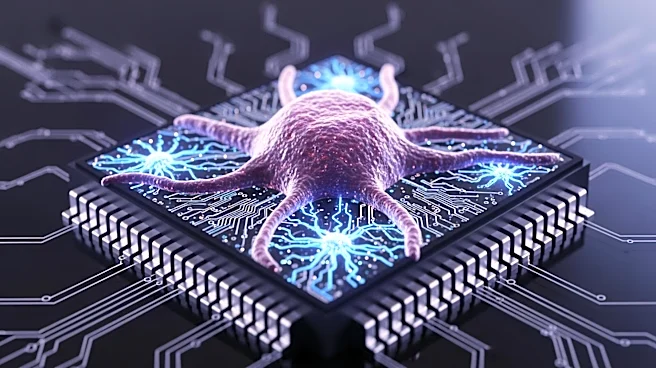
Researchers at Cortical Labs in Australia have successfully trained lab-grown human brain cells on a silicon chip to play the video game 'Doom'. This development follows their previous success with the simpler game 'Pong'. The 'biological computer' consists
of approximately 200,000 human brain cells derived from stem cells. The cells are capable of adapting to stimuli and learning in real-time, as demonstrated by their ability to navigate and respond to the game's environment. The research team converted the game's digital environment into electrical signals that the neurons could interpret, allowing them to perform actions like firing a weapon or moving within the game.
Why It's Important?
This breakthrough in biotechnology and artificial intelligence represents a significant step forward in understanding and harnessing the capabilities of human brain cells outside the body. The potential applications extend far beyond gaming, with implications for drug screening, AI development, and personalized medicine. The efficiency of these biological systems, which operate on minimal power compared to traditional computing, could lead to more sustainable and powerful forms of intelligence. This research also opens up new avenues for exploring the integration of biological and digital systems, potentially revolutionizing fields such as robotics and healthcare.