




What's Happening?
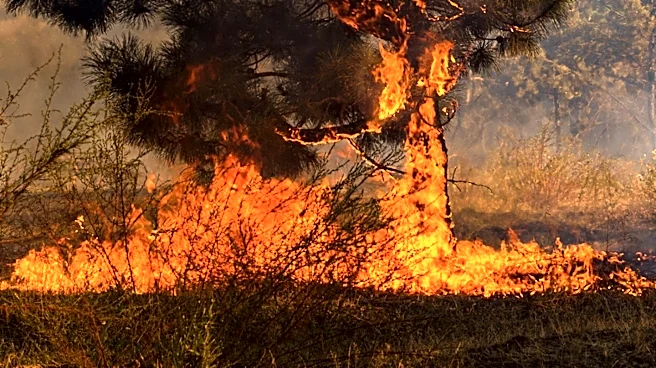
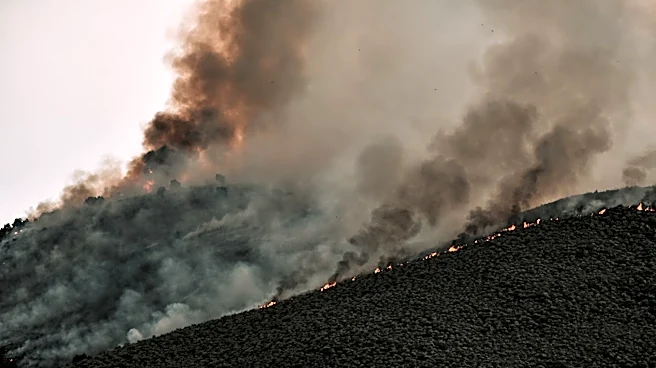
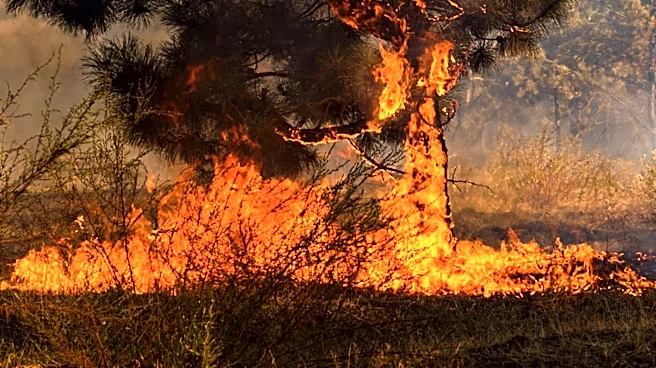
A rapidly expanding wildfire, named the 'North Heglar Fire,' is currently burning in eastern Cassia County, Idaho, near the community of Heglar. The fire, which started Wednesday afternoon, has grown significantly, reaching nearly 1,845 acres and remains
0% contained as of Thursday morning. Initially reported at 700 acres, the fire's active behavior, including torching and running, has led to its rapid spread. The U.S. Wildland Fire Service is managing the incident, which has prompted evacuations in Rockland between Houtz Canyon and Sheep Canyon. Five structures are currently threatened by the blaze. Resources deployed to combat the fire include 6 engines, 2 dozers, 6 large air tankers, and 1 helicopter, with 34 personnel assigned to the incident. The fire is burning on private land north of Heglar Canyon Road and is also posing a threat to federal land. The cause of the fire has not yet been determined.
Why It's Important?
This wildfire poses immediate threats to public safety and property in eastern Cassia County, necessitating evacuations and deploying significant firefighting resources. The rapid growth and zero containment of the 'North Heglar Fire' highlight the dangers of wildfires, particularly in dry conditions, and their potential to quickly overwhelm local resources. The threat to both private and federal lands underscores the broad ecological and economic impact such events can have, affecting natural habitats, agricultural areas, and potentially infrastructure. The involvement of multiple agencies, including the U.S. Wildland Fire Service and Power County Emergency Management, demonstrates the coordinated effort required to manage large-scale natural disasters. The incident also brings attention to the vulnerability of communities in fire-prone regions and the importance of preparedness and rapid response mechanisms to mitigate damage and ensure resident safety.
What's Next?
Firefighting efforts are ongoing, with the incident transitioning to unified command with Raft River Fire to enhance coordination and resource deployment. Full containment of the 'North Heglar Fire' is anticipated by Saturday evening, with full control targeted for Sunday night. Residents in the evacuated areas of Rockland, specifically between Houtz Canyon and Sheep Canyon, are advised to remain away from the area until authorities deem it safe to return. Fire crews will continue to battle the active fire behavior, focusing on establishing containment lines and protecting threatened structures. Investigations into the cause of the wildfire will likely commence once the immediate threat is under control, which could inform future fire prevention strategies in the region. The U.S. Wildland Fire Service and local emergency management will provide further updates on the fire's status and any changes to evacuation orders.
Beyond the Headlines
The 'North Heglar Fire' underscores the increasing challenges posed by wildfires in the Western United States, often exacerbated by climate conditions and land management practices. The incident highlights the critical role of interagency cooperation in managing large-scale environmental crises, as resources from various federal and local entities are mobilized. Beyond the immediate danger, such fires can have long-term ecological consequences, including soil erosion, habitat destruction, and impacts on air quality. Economically, the costs associated with firefighting, property damage, and potential loss of agricultural land can be substantial. The repeated occurrence of such events also raises questions about sustainable land use, community planning in wildland-urban interface areas, and the effectiveness of current fire prevention and mitigation strategies in a changing climate. The incident serves as a stark reminder of the delicate balance between human activity and natural ecosystems.