





What's Happening?
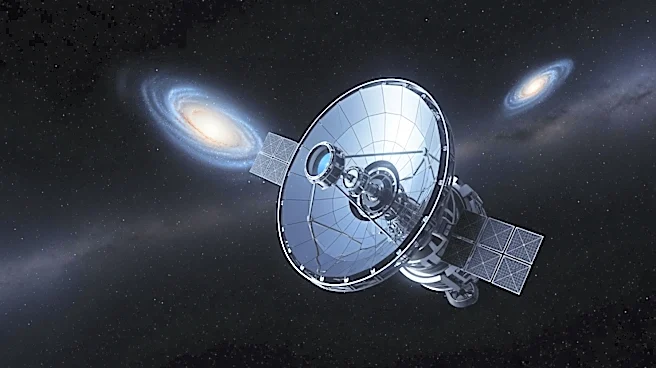
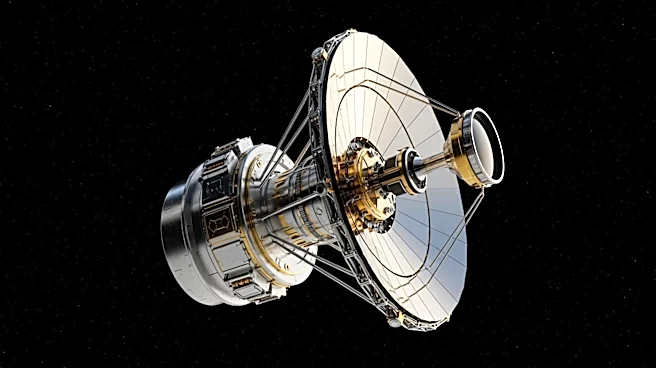
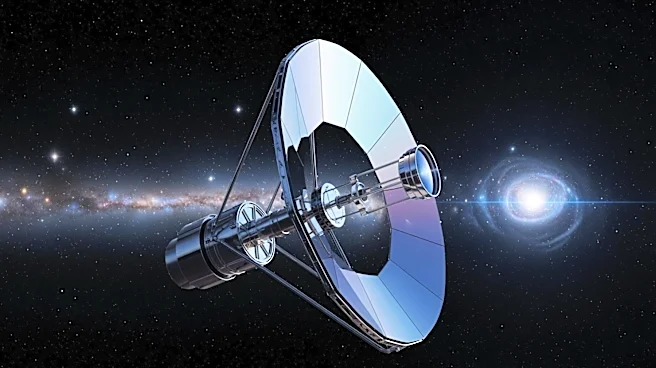
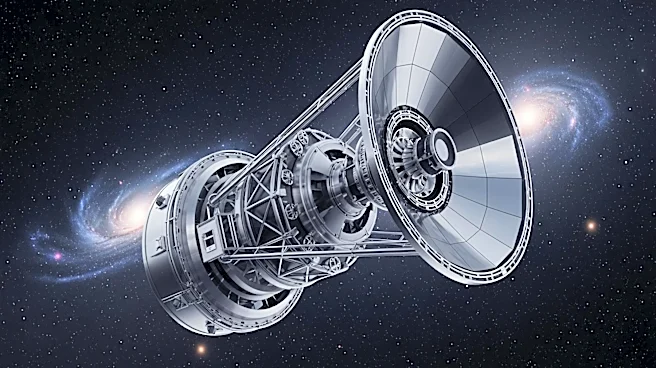
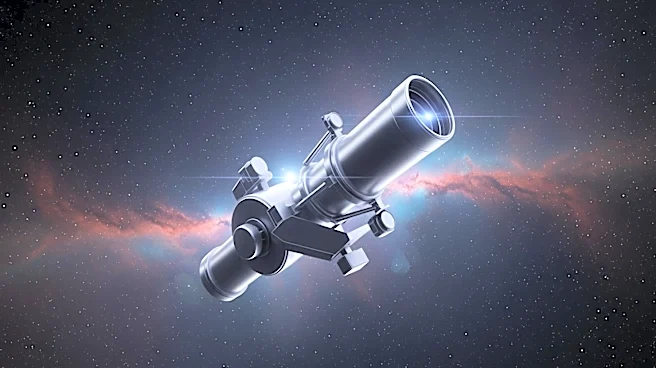
The Nancy Grace Roman Space Telescope, named after NASA’s first chief astronomer, is now complete after over a decade of development. Built at NASA's Goddard Space Flight Center in Greenbelt, Maryland, the telescope is ready to be shipped to Kennedy Space Center in Florida
for a potential launch as early as September. This telescope is designed to take a wide view of the universe, which will aid scientists in understanding dark energy and dark matter, and in discovering thousands of planets beyond our solar system. The Roman Telescope's capabilities are expected to surpass those of the Hubble Space Telescope, offering a broader perspective that could challenge existing theories about the universe.
Why It's Important?
The Roman Space Telescope represents a significant advancement in space exploration technology, potentially reshaping our understanding of the universe. By providing a new 'atlas of the universe,' it could confirm or refute current models of cosmic phenomena, such as dark energy and dark matter, which are crucial to understanding the universe's expansion. The telescope's ability to scan large portions of the sky will allow for unprecedented surveys, potentially leading to groundbreaking discoveries about the universe's structure and evolution. This could have profound implications for astrophysics and cosmology, influencing future research and exploration missions.
What's Next?
Following its launch, the Roman Space Telescope will undergo months of commissioning before beginning scientific operations. This period will involve extensive testing to ensure all systems function correctly in space. The data collected by the telescope will be crucial for developing new theories and models about the universe. Scientists and researchers worldwide will be keenly observing the outcomes of its missions, which could lead to new insights and potentially redefine our understanding of space and time.