



What's Happening?
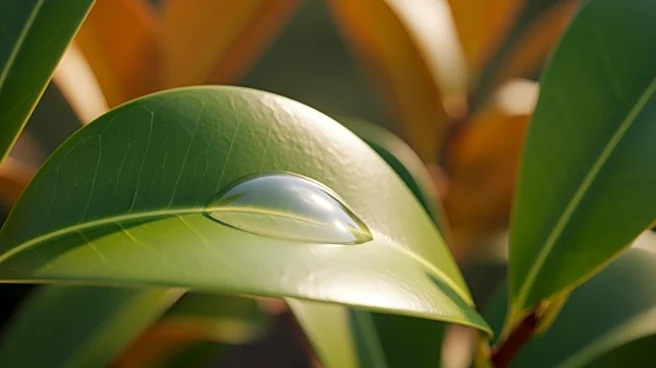
Researchers at the Technion-Israel Institute of Technology have developed a new technology called SafeWax, which could significantly reduce the use of chemical pesticides in agriculture. SafeWax is a bio-inspired coating that creates a water-repellent
layer on plants, preventing fungal spores from germinating. This innovation aims to address the environmental and health issues associated with traditional pesticide use, which can lead to soil degradation and pose health risks to humans. The technology has been tested on various crops, showing promise in protecting plants while maintaining essential physiological processes.
Why It's Important?
The development of SafeWax represents a potential breakthrough in sustainable agriculture, offering a more environmentally friendly alternative to chemical pesticides. By reducing pesticide use by up to 50%, this technology could mitigate the negative impacts of agriculture on ecosystems and human health. It aligns with global efforts to promote sustainable food systems and reduce pollution, as outlined in initiatives like the European Green Deal. The success of SafeWax could lead to widespread adoption, benefiting farmers, consumers, and the environment.
What's Next?
Further research is needed to address challenges related to the production and application of SafeWax on a large scale. The researchers aim to refine the technology to ensure economic competitiveness and long-term efficacy. If successful, SafeWax could be implemented within the next two years, potentially transforming agricultural practices worldwide. The team is also exploring related technologies to combat insect pests, which could further enhance the sustainability of crop protection methods.