




What's Happening?
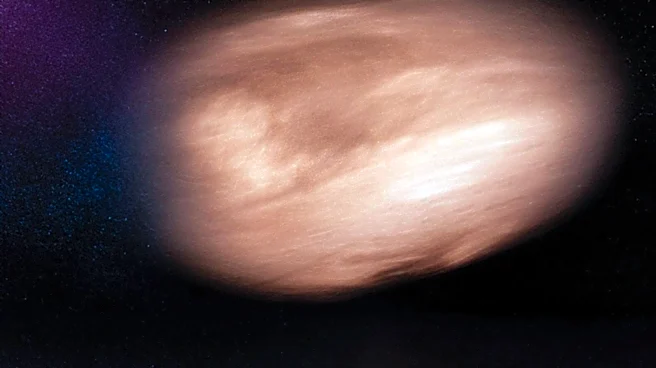
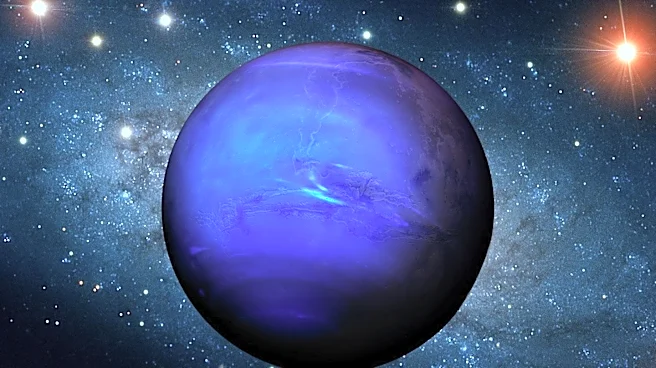
Recent studies have highlighted the prevalence of sub-Neptunes, a class of exoplanets larger than Earth but smaller than Neptune, in the Milky Way. These planets, which do not exist in our solar system, have been frequently observed in data from missions
like Kepler. Despite their commonality, their physical characteristics remain largely unresolved. Sub-Neptunes can vary significantly in composition, with some potentially having rocky cores with thin hydrogen envelopes, while others might be water-rich or possess deep atmospheres. The absence of such planets in our solar system presents a unique challenge for astronomers, as it limits direct observation and comparison. The James Webb Space Telescope has provided some insights, revealing complex atmospheric compositions, but much about these planets remains unknown.
Why It's Important?
The discovery and study of sub-Neptunes are reshaping our understanding of planet formation and the diversity of planetary systems. These planets challenge the traditional solar system-based models and suggest that our solar system might be an outlier in its lack of such planets. Understanding sub-Neptunes could provide insights into the processes that lead to planet formation and evolution, potentially offering clues about the conditions necessary for life. The study of their atmospheres, compositions, and formation histories could also inform the search for habitable worlds beyond our solar system.
What's Next?
Future observations, particularly with advanced telescopes like the James Webb Space Telescope, are expected to provide more detailed data on sub-Neptunes. These observations will aim to clarify their atmospheric compositions and formation processes. Continued research may also focus on the 'radius gap' observed in exoplanet data, which could help explain the differences in planet formation and evolution. As technology advances, astronomers hope to resolve the mysteries surrounding these common yet enigmatic planets.