




What's Happening?
A recent report from the UN Environment Programme (UNEP) indicates that developing countries will still face a substantial funding gap for climate adaptation, even if pledges to triple aid are met. The report, released ahead of the COP31 climate talks,
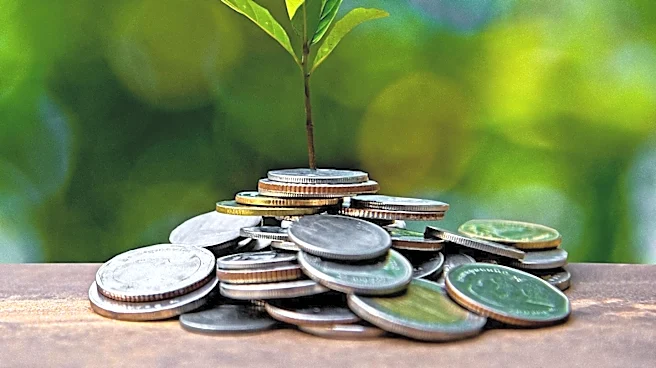
estimates that these nations will require approximately $305 billion annually by 2035, or $420 billion when accounting for inflation, to adapt to climate change impacts. In 2024, rich countries provided only $28.2–31.7 billion in public funding, which is roughly a tenth of the estimated need. UN Secretary-General António Guterres highlighted this disparity, stating that for every dollar needed, only 10 cents are received. The report also notes that an earlier COP30 agreement to triple adaptation funding by 2030 was modified, pushing the deadline to 2035 and allowing loans to count, rather than exclusively grants, making the pledge less ambitious than it initially appeared.
Why It's Important?
This significant funding shortfall has critical implications for global climate resilience and international equity. Developing nations, often the most vulnerable to climate change impacts like deadly heat, rising sea levels, and failing harvests, are left severely under-resourced to protect their populations and economies. The reliance on loans instead of grants places an additional financial burden on these countries, potentially exacerbating existing economic challenges. The report underscores a lack of political will and financial commitment from wealthier nations, despite their historical contributions to climate change. This disparity could lead to increased humanitarian crises, forced migrations, and economic instability in affected regions, with potential ripple effects on global supply chains and international relations. The failure to adequately fund adaptation efforts also jeopardizes the achievement of global climate goals, as the world is not prepared for current climatic conditions, let alone future overshoots of the 1.5°C warming limit.
What's Next?
The findings of the UNEP report will likely be a central point of discussion at the upcoming COP31 climate talks in Antalya, Türkiye. Developing nations are expected to press for clearer commitments, increased funding, and a shift towards grants rather than loans for adaptation efforts. The report suggests that negotiations should focus on clarifying the relationship between contributions from developing and developed countries and their respective responsibilities. There will also be continued scrutiny on whether the Glasgow goal of doubling adaptation finance to approximately $40 billion by 2025 can be met, especially given the estimated 23% shrinkage in rich countries' foreign aid budgets. The effectiveness of the Loss and Damage Fund, which has received requests far exceeding its current pledges, will also be a key area of focus, as it has yet to approve money for a single project despite significant demand.
Beyond the Headlines
The persistent gap in climate adaptation funding highlights a deeper ethical and moral dilemma in international climate policy. The report emphasizes that adaptation is not merely charity but a legal and moral obligation, particularly for nations that have historically contributed the most to greenhouse gas emissions. The vagueness in past pledges, such as the lack of a baseline for tripling adaptation finance, points to a systemic issue of accountability and transparency in global climate finance. Furthermore, the report's first attempt to quantify 'loss and damage' reveals the immense human cost of climate change, with low- and middle-income countries bearing the brunt of floods and landslides. This situation could lead to increased geopolitical tensions as vulnerable nations demand greater climate justice and reparations for unavoidable climate impacts, potentially reshaping international aid frameworks and diplomatic relations.