





What's Happening?
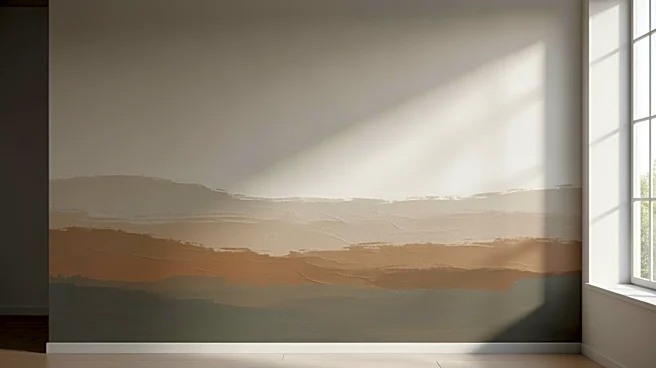
Naoshima, Japan, known as the 'art island,' features wall murals by artist Lee Ufan, part of his Dialogue series. These murals are painted directly onto the walls, consisting of a lozenge of grey paint transitioning from pale to dark shades. The creation
process involves meticulous layering of small brushstrokes over a week, allowing each layer to dry before applying the next. This method results in a deeply calming effect, reflecting a balance between human care and natural imperfection. The island, once heavily polluted and dominated by a Mitsubishi plant, was redeveloped in 1989 by billionaire Sōichirō Fukutake. It now hosts galleries designed by architect Tadao Andō, filled with extraordinary artworks by various artists, including Claude Monet and Yayoi Kusama.
Why It's Important?
The transformation of Naoshima into an art island highlights the potential for art to revitalize and redefine spaces. Lee Ufan's murals, with their emphasis on meticulous care and natural imperfection, offer a unique visual experience that attracts visitors worldwide. This development underscores the role of art in cultural tourism, contributing to the local economy and promoting international cultural exchange. The island's success as a destination for art enthusiasts demonstrates the power of art to foster community identity and economic growth, serving as a model for similar initiatives globally.
What's Next?
As Naoshima continues to attract international visitors, the island's art installations, including Lee Ufan's murals, are likely to gain further recognition. The ongoing interest in the island may inspire similar projects in other regions, promoting art as a tool for cultural and economic development. Additionally, the island's success could encourage further investment in art and cultural tourism, potentially leading to new collaborations between artists, architects, and developers.
Beyond the Headlines
The development of Naoshima as an art island raises questions about the balance between preserving cultural heritage and promoting tourism. While the island's transformation has brought economic benefits, it also highlights the challenges of maintaining the integrity of art installations in the face of increasing visitor numbers. The emphasis on meticulous care in Lee Ufan's work reflects broader themes of sustainability and the relationship between humans and nature, offering insights into how art can address contemporary environmental and social issues.