
What's Happening?
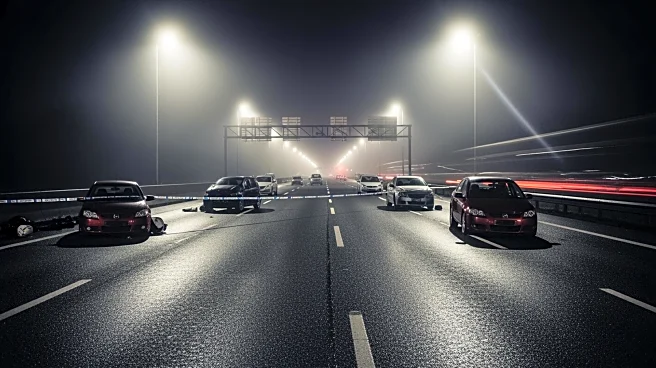
A significant traffic accident occurred on the Kan-Etsu Expressway in Gunma Prefecture, Japan, involving 67 vehicles. The incident resulted in the deaths of two individuals and injuries to 26 others. The accident took
place near the Minakami Interchange and was reportedly caused by vehicles skidding on a frozen road surface. The collision began when a large truck hit a midsize truck that had stopped sideways, leading to a fire that spread to 20 vehicles. The crash site extended over 300 meters. The expressway was closed for a period but has since reopened.
Why It's Important?
This incident highlights the dangers of driving in adverse weather conditions, particularly on expressways where high speeds can exacerbate the severity of accidents. The pileup underscores the need for improved road safety measures and the importance of adhering to speed limits, especially in icy conditions. The accident's impact extends beyond the immediate loss of life and injuries, affecting traffic flow and potentially prompting reviews of safety protocols on expressways. It serves as a reminder of the critical role of infrastructure maintenance and weather-related advisories in preventing such tragedies.
What's Next?
In the aftermath of the accident, there may be investigations into the road conditions and the response of emergency services. Authorities might consider implementing additional safety measures, such as enhanced road surface treatments or more frequent weather advisories. The incident could also lead to discussions on improving vehicle safety standards and driver education regarding winter driving. Stakeholders, including government agencies and road safety organizations, may collaborate to prevent similar occurrences in the future.
Beyond the Headlines
The accident raises questions about the adequacy of current road safety measures in Japan, particularly in regions prone to severe weather. It may prompt a broader conversation about the balance between maintaining traffic flow and ensuring safety during adverse conditions. Additionally, the incident could influence public perception of road safety and lead to increased advocacy for technological solutions, such as advanced driver-assistance systems, to mitigate the risks of driving in challenging environments.