




What's Happening?
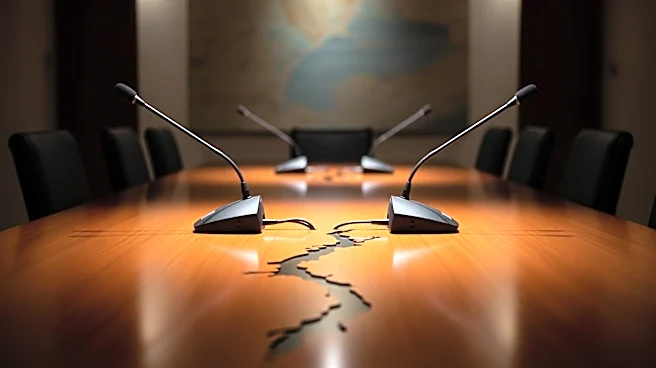
Pakistan is actively mediating to bring Iran back to the negotiating table with the United States as a truce nears its end. The efforts come amid escalating tensions, with the US taking steps that have complicated the mediation process. Despite Pakistan's
hopes, Iran has publicly stated it has no plans to re-engage diplomatically with the US. The situation is further strained by recent US naval actions against Iranian ships, which Iran has condemned as ceasefire violations. The US delegation, led by Vice President JD Vance, is set to arrive in Islamabad for potential talks, but Iran's participation remains uncertain.
Why It's Important?
The outcome of these mediation efforts could significantly impact regional stability and US-Iran relations. Successful negotiations could lead to a de-escalation of military tensions and open pathways for diplomatic resolutions to ongoing conflicts. Conversely, failure to bring Iran back to the table could result in renewed hostilities, affecting global oil markets and regional security. Pakistan's role as a mediator highlights its strategic position and influence in the region, potentially shaping future diplomatic engagements between the US and Iran.
What's Next?
The next steps involve the potential commencement of a second round of talks, contingent on Iran's willingness to participate. The US has extended the truce deadline, providing a narrow window for diplomacy. Observers will be watching for any shifts in Iran's stance or US policy that could facilitate dialogue. The international community, particularly stakeholders in the Middle East, will be closely monitoring developments, as the outcome could have far-reaching implications for regional geopolitics.