



What's Happening?
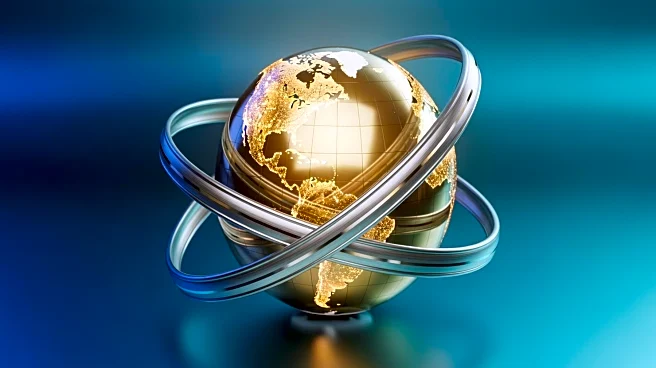
The European Union (EU) and the Mercosur bloc, comprising South American countries, have signed a significant free trade agreement after more than 25 years of negotiations. The agreement, formalized in Asunción, Paraguay, aims to strengthen commercial
ties amidst global trade tensions and protectionism. The deal involves Argentina, Brazil, Paraguay, and Uruguay, with Bolivia expected to join in the future. Venezuela, currently suspended from Mercosur, is not part of the agreement. The accord will gradually eliminate over 90% of tariffs, creating one of the world's largest free trade zones, benefiting over 700 million consumers. European Commission President Ursula von der Leyen emphasized the agreement as a counter to protectionist policies, particularly those of the Trump administration. Brazilian President Luiz Inácio Lula da Silva, a long-time supporter of the deal, highlighted its significance for global cooperation.
Why It's Important?
This agreement represents a major geopolitical win for the EU, enhancing its influence in a resource-rich region contested by global powers like the U.S. and China. It underscores a commitment to multilateralism and fair trade, contrasting with the protectionist stance of the Trump administration. The deal is expected to boost economic growth by facilitating cheaper goods and services across the regions involved. However, it faces opposition from European farmers concerned about competition from South American agricultural imports. The EU has attempted to address these concerns with subsidies and regulatory measures. The agreement's success hinges on ratification by the European Parliament, where protectionist sentiments could pose challenges.
What's Next?
The next step for the agreement is ratification by the European Parliament, which could face hurdles due to opposition from protectionist lobbies and countries like France. French President Emmanuel Macron has expressed concerns about the impact on local farmers and potential political repercussions. The EU will need to navigate these challenges to ensure the agreement's implementation. Meanwhile, Mercosur countries will prepare to integrate into the new trade framework, potentially adjusting their agricultural practices to meet EU standards. The outcome of this ratification process will significantly influence the future of EU-Mercosur relations and global trade dynamics.