






What's Happening?
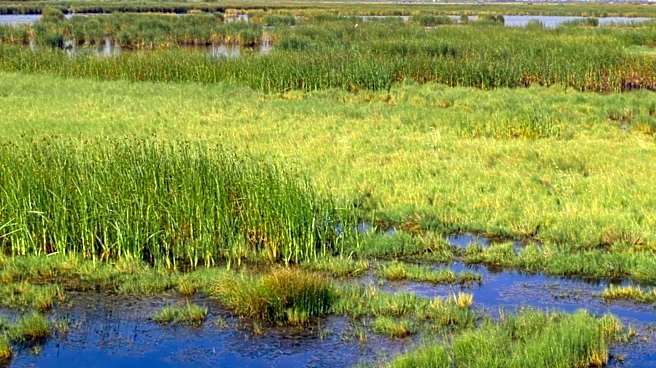
Century Bog, a 75-acre former cranberry farm spanning Plymouth and Wareham, Massachusetts, is undergoing a significant ecological restoration to revert to its natural wetland state. The project involves extensive construction work, including excavating
soil, removing pine trees, and breaking up buried plastic piping to eliminate farm infrastructure. The goal is to uncompact the soil, allowing it to retain more water and function as a natural wetland. This initiative is part of a broader trend in Massachusetts where a growing number of cranberry farmers are retiring their bogs. The U.S. Department of Agriculture reported a 40% increase in retired bogs between 2017 and 2022, with projections indicating that 20% of the state's remaining bogs are likely to retire within the next decade. The land for Century Bog was sold to the state in 2010 by its last owner, the A.D. Makepeace Company, and subsequently protected as part of the Red Brook Wildlife Management Area.
Why It's Important?
The restoration of Century Bog is a significant step towards enhancing biodiversity and ecological resilience in Massachusetts. Wetlands are crucial for supporting diverse plant and animal species, including the unique brook trout known as salters, which will benefit from this project. Beyond biodiversity, wetlands play a vital role in environmental protection by absorbing nitrogen runoff from agriculture and septic systems, preventing harmful algae blooms in coastal waters. They also serve as natural flood management systems, which is increasingly important as climate change leads to more erratic storm patterns in the state. This project aligns with the Healey administration's goals to restore 75% of the state's most important habitats by 2050 and highlights a shift in land use that benefits environmental conservation and public safety.
What's Next?
The restoration of Century Bog is expected to continue for several years, with the initial regeneration of the site occurring relatively quickly, but full completion anticipated in 7 to 10 years. The process will involve the natural recolonization of the restored bog surface by native seeds, some of which may have been dormant for decades. The Massachusetts Department of Ecological Restoration, which has a dedicated cranberry bog program since 2018, will likely continue to oversee this and other similar projects. With 11 additional projects in the pipeline and hundreds of acres already restored, this trend is set to expand across the state. The success of these restorations could encourage more cranberry farmers to consider retiring their bogs for ecological purposes, especially given the economic challenges and climate change impacts facing the industry.
Beyond the Headlines
This ecological transformation reflects a deeper societal shift towards valuing natural ecosystems and addressing the long-term impacts of agricultural practices. The economic pressures on cranberry farmers, including rising costs, out-of-state competition, and the effects of climate change like droughts, are making bog retirement an increasingly viable option. For many aging farmers, selling their land for restoration provides a retirement strategy, offering financial stability while contributing to environmental conservation. This trend also underscores the complex interplay between economic viability, land use, and environmental policy, demonstrating how market forces and climate concerns can drive significant ecological benefits. The project also highlights the importance of long-term planning and funding, as securing resources for such extensive restorations can take a decade or more.