
What's Happening?
The U.S. military is experiencing a decline in the application of operational art, a critical component in translating strategic objectives into coordinated military actions. This issue was highlighted
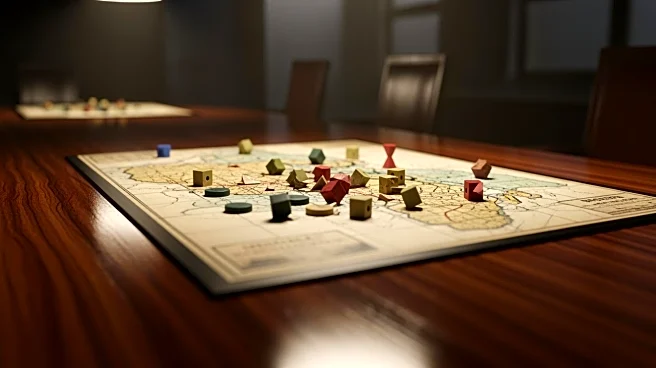
during a Department of Defense wargame simulating a 2034 conflict involving the United States, China, and the Philippines. The wargame revealed significant gaps in the understanding and execution of operational art, particularly in identifying and exploiting decisive points and centers of gravity. These concepts are essential for effective campaign design and execution, yet they are often misunderstood or neglected. The decline in operational art is attributed to a shift in focus from large-scale warfare to smaller operations post-Cold War, leading to strategic paralysis even with advanced technology.
Why It's Important?
The decline in operational art has significant implications for U.S. military effectiveness, particularly in the context of great-power competition with China. As the Indo-Pacific region becomes a focal point for geopolitical rivalry, the ability to effectively apply operational art is crucial for maintaining strategic advantage. Failures in operational design can lead to strategic defeat, undermining U.S. influence and military credibility. The wargame's findings underscore the need for revitalizing operational art through enhanced education, doctrinal mastery, and the integration of advanced technologies like AI to support decision-making and operational planning.
What's Next?
To address the decline in operational art, the U.S. military is encouraged to invest in AI technologies tailored for military planning and to enhance education in operational art. This includes integrating AI tools in phases, starting with terrain and information management, and progressing to more complex analyses. Additionally, there is a call for a renewed emphasis on doctrinal education that transcends procedural compliance, focusing on experiential learning and wargaming to expose conceptual weaknesses and foster adaptability. These steps aim to restore operational proficiency and ensure the U.S. military can effectively respond to future conflicts.
Beyond the Headlines
The decline in operational art also highlights cognitive barriers such as proceduralism and failure of imagination, which hinder effective military planning. Overreliance on established procedures can lead to rigidity and a lack of creativity in adapting to evolving threats. The integration of AI and advanced technologies offers a potential solution by enhancing planners' understanding and application of operational art, reducing cognitive burdens, and supporting more robust operational planning. However, the successful integration of technology requires maintaining human judgment and doctrinal alignment to ensure effective decision-making.