



What's Happening?
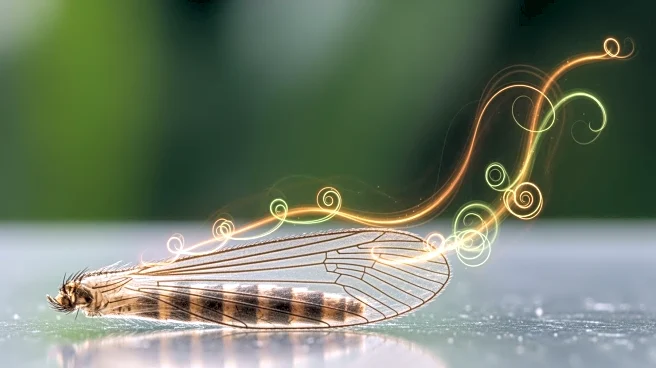
Research led by Conor J. McMeniman at Johns Hopkins Bloomberg School of Public Health has uncovered that mosquitoes track human scent with precision, akin to a GPS system, to locate and bite their victims. The study highlights that mosquitoes are particularly
attracted to a combination of ammonia, lactic acid, and short-chain acids, which are more effective in drawing mosquitoes than any single component alone. This behavior is crucial for mosquitoes in locating hosts and transmitting diseases such as malaria. The research involved testing hundreds of female malaria mosquitoes using heated landing pads and controlled air streams, revealing that human whole-body odor is a stronger attractant than carbon dioxide alone.
Why It's Important?
The findings of this study have significant implications for public health, particularly in regions where mosquito-borne diseases like malaria are prevalent. Understanding the specific chemical cues that attract mosquitoes can lead to the development of more effective repellents and traps, potentially reducing the incidence of disease transmission. This research could inform strategies for mosquito control, such as creating lures that mimic human scent to divert mosquitoes away from people. Additionally, it highlights the importance of personal protection measures and could guide public health policies in areas prone to mosquito-borne illnesses.
What's Next?
Future research may focus on developing new mosquito repellents that target the specific ionotropic receptors identified in the study. Public health organizations could use these insights to enhance mosquito control programs, particularly in high-risk areas. There is also potential for creating community-based interventions that reduce human-mosquito interactions by altering environmental factors that contribute to mosquito attraction.