
What's Happening?
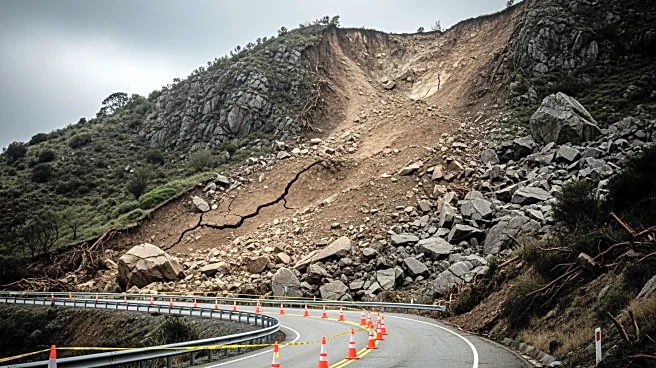
Italian Premier Giorgia Meloni visited Niscemi, a town in Sicily, after a massive landslide caused by heavy rains from Cyclone Harry. The landslide, spanning 4 kilometers, has left homes teetering on a cliff
edge and forced the evacuation of over 1,500 residents. Civil protection crews have established a 150-meter wide 'no go zone' due to the instability of the ground. The federal government has declared a state of emergency for the affected regions and allocated an initial 100 million euros for relief efforts. Meloni assured that more funding would be provided to address the needs of displaced residents and to restore essential services.
Why It's Important?
The landslide in Sicily highlights the vulnerability of certain regions to natural disasters, exacerbated by climate change and inadequate infrastructure planning. The event underscores the need for improved disaster preparedness and urban planning to prevent construction in high-risk areas. The government's response, including financial aid and relocation efforts, is crucial for the immediate welfare of affected residents. This situation also raises questions about long-term strategies to mitigate similar risks in the future, emphasizing the importance of sustainable development and climate resilience in policy-making.
What's Next?
Authorities are working to find permanent relocation solutions for displaced families, as the ground remains too unstable for habitation. The government is expected to continue assessing the damage and allocate additional resources for recovery efforts. Political discussions may arise regarding the allocation of funds, with opposition leaders suggesting redirecting resources from other projects to support storm-hit regions. The situation may prompt a reevaluation of construction regulations and disaster preparedness strategies in Sicily and other vulnerable areas.





