



What's Happening?
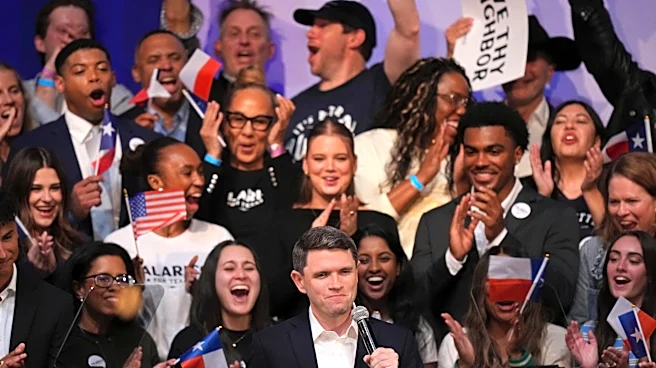
Chris Pappas, a New Hampshire Democrat, has been elected to the U.S. Senate, becoming the first openly gay man to achieve this position. His victory on November 3 against Republican John E. Sununu secures the seat being vacated by Democrat Jeanne Shaheen.
Pappas is set to join the Senate in January. This milestone follows his previous achievement in 2018 when he became New Hampshire’s first openly gay member of Congress. Pappas, 46, a Manchester native, has a political career that includes serving in the New Hampshire legislature, as Hillsborough County treasurer, and on the state’s Executive Council before his election to the U.S. House. His campaign focused on issues such as the price of everyday life and healthcare. The term 'openly' signifies that voters were aware of his identity, distinguishing this electoral milestone from historical speculation about politicians' private lives.
Why It's Important?
Pappas's election is a significant moment for LGBTQ+ representation in U.S. politics, marking a new barrier crossed in national leadership. While Tammy Baldwin, a lesbian, was the first openly gay person elected to the Senate in 2012, Pappas's win specifically addresses the representation of openly gay men in the chamber. This development reflects a broader societal shift towards greater acceptance and inclusion of LGBTQ+ individuals in public office. His presence in the Senate could influence legislative decisions, committee work, and public debates, particularly on issues related to equality, healthcare, and civil rights. The ability of an openly gay man to win a statewide Senate election in New Hampshire suggests a growing electorate that values diversity and is willing to elect candidates based on their qualifications and policy positions, regardless of sexual orientation.
What's Next?
Chris Pappas will assume his Senate seat in January, where he is expected to continue advocating for the issues he campaigned on, including healthcare and economic concerns. As a member of the Congressional Equality Caucus, his legislative priorities will likely include supporting measures such as the Equality Act and the Respect for Marriage Act. His election may also inspire other LGBTQ+ individuals to pursue political careers, potentially leading to further diversification of elected officials at all levels of government. The focus will now shift to his legislative performance and how his identity and experiences contribute to the policy-making process and representation within the U.S. Senate.
Beyond the Headlines
Pappas's election transcends a mere political victory; it symbolizes a cultural evolution in the U.S., challenging traditional norms of leadership and representation. The emphasis on 'openly' gay highlights the importance of transparency and authenticity in public life, fostering a more inclusive political landscape where candidates are judged on their merits and platforms rather than their sexual orientation. This event contributes to a global narrative of increasing LGBTQ+ leadership, as seen with figures like Iceland's Jóhanna Sigurðardóttir and Ireland's Leo Varadkar. It underscores the idea that progress in political representation can occur unevenly across different offices and communities, but each breakthrough contributes to a more equitable and representative democracy. The long-term implications include potentially shifting public perceptions and encouraging greater acceptance of diverse identities within mainstream society.