






What's Happening?
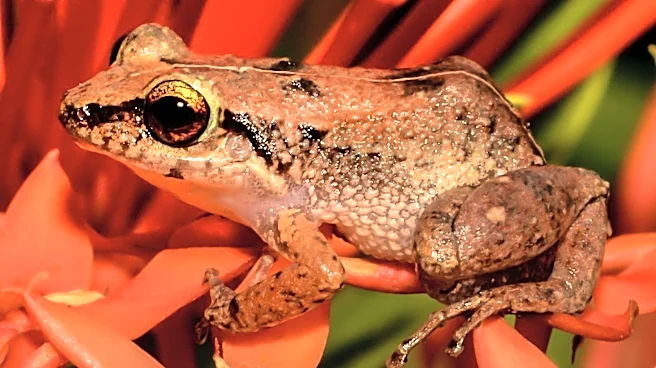
Researchers at the Japan Advanced Institute of Science and Technology have discovered a bacterium from the intestines of Japanese tree frogs that exhibits significant anticancer activity in mice. The bacterium, Ewingella americana, was found to completely
eliminate tumors in a mouse model of colorectal cancer with a single intravenous dose. This approach, which involves using living bacteria to target tumors directly, differs from previous methods that focused on altering the gut microbiome. The bacterium not only attacks tumors directly but also stimulates the immune system, attracting immune cells to the tumor site and promoting cancer cell death.
Why It's Important?
This discovery represents a potential breakthrough in cancer treatment, offering a novel approach that could complement or even surpass existing therapies. The ability of E. americana to specifically target tumors without affecting healthy organs suggests a promising therapeutic option with potentially fewer side effects. If further research confirms its efficacy in humans, this bacterium-based therapy could revolutionize cancer treatment, providing new hope for patients with difficult-to-treat cancers. The study also highlights the potential of exploring biodiversity for medical advancements, opening avenues for discovering new treatments from natural sources.
What's Next?
Future research will focus on determining whether this bacterial therapy can be applied to other types of solid tumors, such as breast cancer and melanoma. Researchers plan to optimize treatment methods, including dose fractionation and direct tumor injection, and explore combinations with existing chemotherapy or immunotherapy. Clinical trials in humans will be necessary to evaluate the safety and efficacy of this approach. The findings also encourage further exploration of naturally occurring bacteria as potential cancer therapies, potentially leading to the development of new treatment options for various cancers.